Table of contents
- What сonstitutes abusive boss?
- Signs and behaviors of abusive boss
- 1. Lying
- 2. Inability to accept feedback
- 3. Screaming when upset
- 4. Providing unclear or unhelpful instructions
- 5. Humiliation of others
- 6. Gossiping
- Effects of abusive boss on employees
- Organizational responsibilities in abusive boss case
- How to protect yourself against abusive boss?
- Conclusion
What сonstitutes abusive boss?
An abusive boss is someone who regularly manipulates, criticizes, or intimidates employees while hiding behind their authority. Instead of leading, they use their position as leverage. This kind of behavior can come from insecurity, narcissistic traits, or a strong need to stay in control. It may even be intentional, such as a way to push certain employees out, dodge accountability, or shift attention away from their own mistakes.
Signs and behaviors of abusive boss
An abusive boss is emotionally unpredictable, says one thing and means another, embarrasses employees in front of others, or shuts down any form of feedback. When things don't go their way, their behavior gets even worse. They might raise their voice or throw around subtle (or not-so-subtle) threats to keep people in line. Let’s take a look at the signs of abusive bosses in detail.
1. Lying
An abusive boss will lie to protect themselves. That can mean withholding important information, denying things they clearly said before, or rewriting events in a way that takes responsibility away from them. They might make promises they never plan to keep or quickly shift the blame when something goes wrong.
2. Inability to accept feedback
Expect an abusive boss to react defensively to feedback. Instead of hearing you out, they may shut down the conversation, act dismissive, or even treat simple questions as personal attacks. Employees who speak up can end up facing retaliation, like being taken off projects without explanation, publicly criticized for minor mistakes, or given the silent treatment (a form of stonewalling abuse).
3. Screaming when upset
Yelling or raising their voice can be used as a way to intimidate. These outbursts can happen during meetings, in front of coworkers, or privately behind closed doors. This creates a tense atmosphere where people start walking on eggshells to avoid triggering the next reaction.
4. Providing unclear or unhelpful instructions
Some abusive bosses can give vague directions or frequently change what they expect from you. One day it could be about speed, and the next day, perfection. When things inevitably go wrong, they blame their subordinates. It becomes a no-win situation where people feel they were set up to fail from the start.
5. Humiliation of others
Public criticism, mocking remarks, or a sarcastic tone can all be used to embarrass employees. It might happen during meetings, over email, or even in front of clients. Over time, people stop volunteering ideas or taking initiative because they don't want to be singled out.
6. Gossiping
An abusive boss may gossip about employees, share private information, or speak negatively about team members behind their backs. Instead of addressing issues directly, they spread rumors or make side comments that slowly create tension among people.
They may even act friendly at first by asking personal questions or following you on social media to find more about you. If you'd like to understand more about how abusers work, check our guide on "What is the cycle of abuse?"
Office politics can get messy. If you worry that a colleague or even your boss might be keeping tabs on you, whether that's your phone or social media, it can feel unsettling. That's where Clario Anti Spy helps. Its Anti-spy setup walks you through tightening the privacy settings on your phone and social media accounts, while Hidden app scan checks for privacy-invasive apps so you can remove anything that shouldn't be there.
Here's how to run a Hidden app scan with Clario Anti Spy:
- Download Clario Anti Spy and subscribe to create an account.
- Tap Set up under Anti-spy setup and work through each category—e.g., Protect social media accounts—to enhance your privacy.
- Next, tap Scan under Hidden app scan to identify and remove anything suspicious.
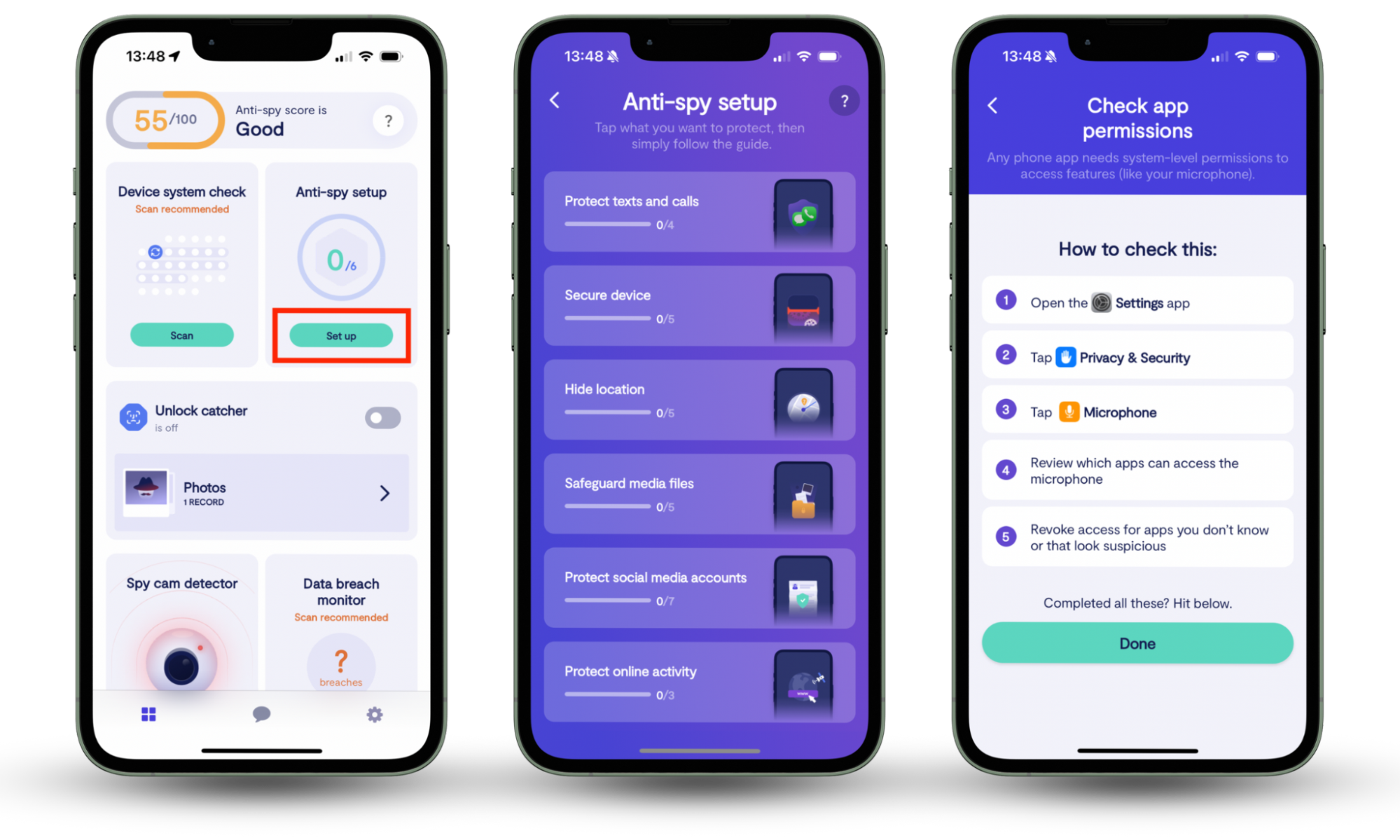

If you need support, tap the Messages icon for live 24/7 support. Clario experts help with all sorts of issues, and here's what one of them had to say about a customer who suspected spyware on their phone:
"A customer reached out after noticing strange behavior on their phone: faster battery drain, weird targeted ads, and a general sense that something was off. They hadn’t installed anything new, but something just didn’t feel right.
We ran a Hidden app scan, which revealed several apps quietly requesting access to their data: location, microphone, and even contacts. A few of them, the customer didn’t even recognize.
We helped them review the results, remove suspicious apps, and secure their settings. By the end, they felt reassured and back in control, knowing exactly what was on their phone - and who had access to it."
Effects of abusive boss on employees
Working under an abusive boss can slowly wear you down. What starts as the occasional stressful day can turn into constant anxiety, emotional exhaustion, and eventually burnout. Your focus starts to slip, your motivation drops, and your performance may suffer. You might call in sick more often, think about quitting, or have trouble sleeping. The signs of emotional abuse can also show up in your personal life, affecting your relationships, your mood, and your general well-being.
Organizational responsibilities in abusive boss case
Organizations have a lot of responsibility in preventing and addressing abusive behavior. Creating a safe workspace is not just about reacting to complaints, but about setting clear standards, supporting employees who speak up, and taking action before problems escalate.
Organizational responsibilities in handling abusive bosses include:
- Clear workspace policies: Define what behavior is acceptable and what crosses the line, so there's no ambiguity for managers or employees.
- Safe reporting channels: Provide confidential ways for employees to report abuse from superiors without fear of backlash.
- Fair and consistent investigations: Take complaints seriously and handle them objectively when someone speaks up.
How to protect yourself against abusive boss?
If you're dealing with an abusive boss, the focus should be on protecting your well-being while staying professional. You may not be able to control their behavior, but you can control how you respond and how prepared you are. That means keeping clear records, managing your reactions, using the support systems available to you, and thinking ahead about your long-term options.
Here's how you can protect yourself from an abusive boss:
- Document everything: Write down dates, times, what was said or done, and who was present. Save relevant emails or messages. Having clear records gives you something concrete to rely on if you decide to report your boss.
- Stay calm and professional: As hard as it can be, try not to react emotionally in the moment. Maintaining your composure protects your credibility.
- Set boundaries where possible: Keep communication clear, direct, and focused on work. Avoid getting pulled into personal arguments.
- Use internal reporting systems: If your organization has a formal complaint process, consider using it. Take the time to learn how the procedure works ahead of time so it's less intimidating.
- Ask for advice: Talk to HR, a legal professional, or a mentor you trust to understand your options.
- Build a support network: Friends, family, or a therapist can help you deal with the stress and keep things in perspective.
- Have an exit plan: If nothing improves, moving on may be the healthier choice for your career, mental health, and personal life. Knowing you have a plan also makes the situation easier to deal with in the meantime.
Conclusion
An abusive boss is not just difficult. It's someone whose toxic behavior wears people down and derails the work environment. Recognizing the signs early can protect both your well-being and your career. While it's the organization's responsibility to address abusive leadership, you must also know your rights and options so you can deal with the situation.
If you're worried someone may be keeping tabs on you, Clario Anti Spy can help. Use its Anti-spy setup and Hidden app scan features to add an extra layer of protection to your phone.