Table of contents
- Signs the CIA is watching you
- Why the CIA can spy on you
- How the CIA is watching you
- Why the CIA collects your metadata
- How to protect yourself from CIA spying
- Conclusion
Editor’s note
Unless you’re involved in illegal activities that are a threat to national security or are just unlawful, the CIA most likely is NOT spying on you. Mass surveillance is also not the case where they listen to your calls and know your location at all times. It is a preventative measure at best. However, if you’re worried that someone (like your ex, partner, or an employer) has installed a spy app on your phone or is trying to unlock it without your consent, Clario Blog is the place to be! Now that we’ve got that out of the way, and you still worry the CIA is spying on you, keep reading.
Signs the CIA is watching you
If you’re worried the CIA may be watching you for whatever reason, there are some clear signs you can look out for:
- Excessive battery drain: If your mobile device's battery is draining faster than usual, it could be a sign that spyware is running in the background. These can consume a lot of energy, even when your device appears to be idle.
- Slower performance: In addition to sapping battery life, spyware and other malicious tools consume system resources, such as processing power and memory (RAM). This can cause other applications to become noticeably slower to load and respond.
- Higher data usage: Spyware and other hacks typically feed information back to their creators. If your devices are using more data than usual or exhibiting unusually high network activity, it could be a sign that they are secretly sending information elsewhere. You may also suffer unexpected charges for data, phone calls, and text messages.
- Your webcam is on when you’re not using it: If you find your webcam is on when you’re not using it for a video call, it’s a warning that another application, such as hidden spyware, is accessing your camera in the background without your knowledge.
- Your device feels hot: In combination with the signs above, you may notice that your device always feels hot. This indicates that even when you’re not using it, it’s still working hard to tackle processes that probably shouldn’t be running while it’s idle.
- Random apps appear: Although most spyware tools are well hidden, others may be disguised as seemingly innocent applications. If you notice random apps and software that you did not install, it could be something malicious that’s trying to stay undetected.
If you have a device that is exhibiting strange behaviour or you’ve noticed your webcam is on when you’re not using it, these are signs you may have been hacked, and that you could be being watched by the CIA or another government agency. To be sure, check out our guide on how to tell if someone is spying on your phone.
Why the CIA can spy on you
You might assume that the CIA isn’t spying on you because it has no reason to. You don’t do anything illegal, and you’re not considered a threat in any way, so why would it? Well, you don’t need to be a target to be a victim of mass surveillance. As we touched on in the section above, all of us are being watched when we’re in public and online.
The CIA and other surveillance advocates insist that this kind of monitoring is essential for solving and preventing crimes, cracking down on terrorism, and reducing other threats. And there’s certainly some truth to that. Criminals are caught every day based on digital evidence, including CCTV recordings, phone records, and other data.
The hard truth of the matter is that the CIA doesn’t need a reason to spy on anyone. In the interests of public safety and national security, it has the authority to monitor all of us in an effort to identify, prevent, and apprehend the few who are up to no good.
Those in favor of protecting our privacy believe the CIA and other agencies often abuse their monitoring and spying tools. Despite this, surveillance online and in the real world continues to become more widespread every year, so it’s up to us to protect our data as best we can to maintain what privacy we have left.
How the CIA is watching you
In addition to accessing CCTV footage and phone records, the CIA is spying on citizens in any number of ways, according to recent leaks, such as those detailed by WikiLeaks. These include:
- Hacks: As we’ve outlined in the sections above, one of the most common surveillance methods the CIA uses to monitor individuals of interest is through hacking. It is believed to have a large and growing catalog of tools and zero-click exploits for every operating system, which can be used to collect a wide range of data, including photos, microphone and camera recordings, contacts, messages, and nearly everything else on your devices.
- Spoof cell towers: The CIA has been known to use spoof cell towers, also referred to as Stingrays, to collect information. These simulate real cell towers, tricking your phone into connecting to them and transmitting your personal information and location data.
The CIA can spy on you using a variety of methods, including spoofing cell towers and hacking devices running Android, iOS, macOS, Windows, and other operating systems, which can collect data and monitor your activities.
Why the CIA collects your metadata
Another common way the CIA is watching you is by collecting your metadata. This may seem trivial given that metadata does not include the content of your messages, photos, and other documents, but it provides plenty of other useful information, including:
- Your locations
- Your hobbies and interests
- The things you buy
- Who you call and how often you call them
- The apps you use
Using your metadata, the CIA can identify key facts in an investigation, such as who was in a specific location at a particular time. Metadata doesn’t reveal the content of our messages, images, and documents, but it can build a picture of our activities and behaviors.
How to protect yourself from CIA spying
Editor’s note
It’s almost impossible to prevent the CIA from spying on you completely unless you plan to stop using modern devices, never visit public places, and adopt other extreme behaviors that would severely impact your quality of life. More importantly, it is not our goal to advise citizens who engage in illegal activities on how to avoid being monitored. Most likely, they can’t. However, if you’re worried your ex or current partner is spying on you, read the instructions below.
There are some steps you can take to avoid spying:
- Keep devices up to date: Software updates include bug fixes and security improvements that make it harder for our devices to be hacked. Updating your smartphone and other devices reduces the possibility that they can be infected and used to spy on you.
- Stop sharing so much: If you don’t want to stop using social media altogether, try reducing the amount of data you share. Don’t have public conversations with others and avoid “checking in” or posting photos every time you visit a place. Additionally, utilize the privacy protections offered by social media platforms to prevent individuals who aren’t friends from accessing specific information, such as your friend list and photos. See our guide on how to stop cyberstalking for more useful tips.
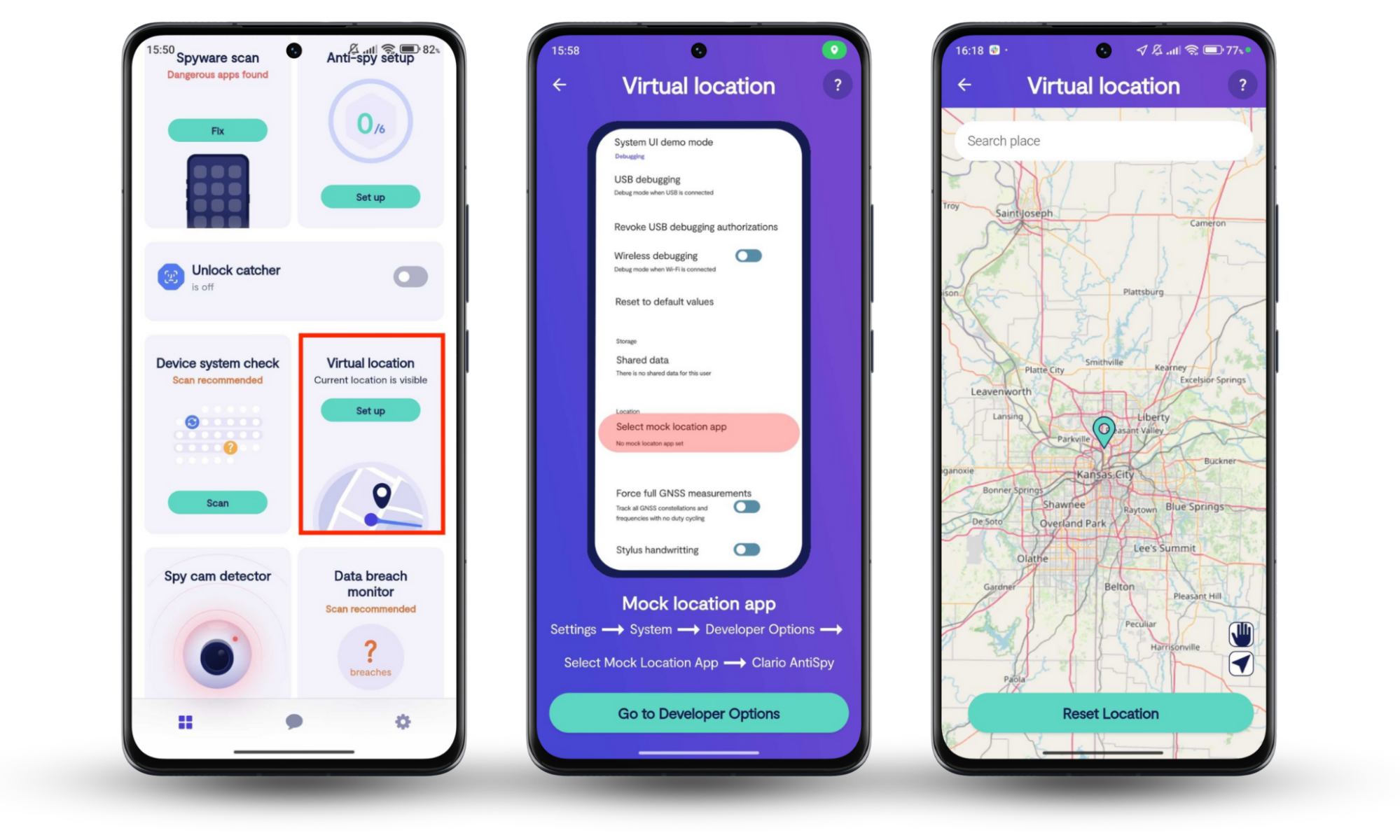
- Use a VPN: Although it’s difficult to hide everything you do online, you can make it harder for your activities to be traced back to you. By using a virtual location feature, like the one built into Clario Anti Spy, you can completely change your phone’s actual location.
To protect your device from spyware, create a virtual location (for Android), and get alerts if you suffer a data breach (Android and iOS). Install the Clario Anti Spy app by following these steps:
- Download Clario Anti Spy and get a subscription.
- Open Clario Anti Spy and choose Virtual Location on the dashboard.
- Follow the on-screen instructions to set up your virtual location.
- Once you are done, your abusive ex will not only not know your real location, but they will think you’re in another country or a continent.
Note
Using the Virtual location feature not only will change your phone’s location, it will also affec the services that rely on GPS. If you change your virtual location to Italy, your Uber will also offer your services in italy.
- Encrypt your communications: It is highly recommended that you use encrypted communication services to prevent the CIA and others from intercepting and reading your data. Services like FaceTime, iMessage, WhatsApp, Telegram, and others all offer end-to-end encryption, ensuring that no one—not even the service providers—can access your data.
- Use antivirus protection: Make it more difficult for your devices to be hacked by bolstering their protection. Clario Anti Spy is a comprehensive cybersecurity app that features a built-in anti-spy scan, and 24/7 data breach monitoring. It also offers powerful protection from spying by stopping nasty trackers from monitoring your every move, and identifying malicious software that was designed to spy on you.
To make it more difficult for the CIA to spy on you, you can keep your devices up to date to make them more secure, avoid sharing too much on social media, use encrypted communication services, and protect your devices using tools like Clario AntiSpy.
Conclusion
The CIA has the ability to monitor individuals of interest, and it claims that it must do this in the interests of security. In the modern world—in which we rely on smartphones, computers, and other gadgets to stay connected—it’s almost impossible to prevent it completely, but there are things you can do to cut down on the amount of data the CIA has access to.
As we’ve outlined in the article above, it is advisable to keep your devices up to date, use encrypted communication services, avoid sharing too much online, and increase device protection with an application like Clario Anti Spy’s Virtual location or Data breach monitor. It also offers an Anti-spy setup, a Hidden apps scan, and an Unlock catcher.