Table of contents
- Definition and characteristics of narcissistic abuse
- Impact of narcissistic abuse on mental, emotional, and physical health
- Stages of healing and recovery from narcissistic abuse
- 1. Denial and recognition
- 2. Grief, anger, and emotional turmoil
- 3. Acceptance, discernment, and boundary reconstruction
- 4. Rebuilding self/self‑rediscovery
- 5. Hope, growth, and revitalization
- Practical strategies for healing from narcissistic abuse
- 1. Establishing boundaries
- 2. Seeking professional help
- 3. Self‑compassion and self‑care
- 4. Building healthy relationships and support networks
- Conclusion
Definition and characteristics of narcissistic abuse
Narcissistic abuse is a sequence of controlling, diminishing, and exploiting behaviors that alter your perception of reality and self-worth. Abusers tend to create a zone of perpetual emotional turmoil through instability, leaving the victim isolated and confused, feeling completely helpless. Narcissistic abuse is imposed on others by people with narcissistic personality disorder.
Being on the receiving end of narcissistic abuse can be painful. To get the desired attention, narcissists can be emotionally manipulative or psychologically coercive. Meaning they attack and diminish the victim's sense of self and reality through a repeated sequence of emotional abuse.
Common manipulation tools of a narcissist are gaslighting, breaking your boundaries, and control. An abuser's breach of boundaries can include invasive digital abuse, such as spyware. They often install hidden apps to track their victims' moves, communication, and activities. In worst-case scenarios, they can collect confidential information to later manipulate you with it.
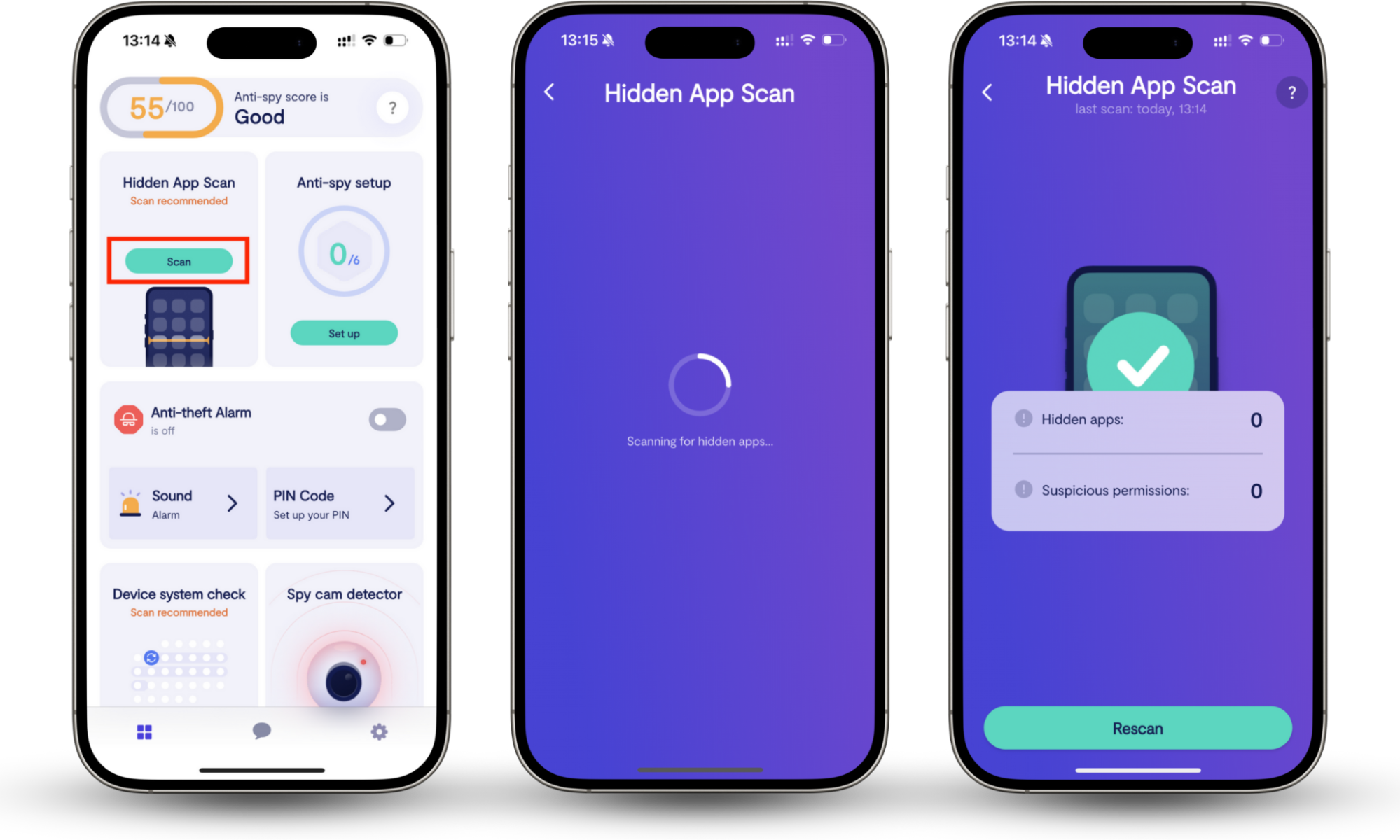
To prevent this from happening, use Clario Anti Spy. This is a digital cybersecurity tool created to protect and boost users' digital privacy. Clario Anti Spy’s Hidden app scan will check your mobile device for suspicious apps that may be spyware and immediately delete them.
Here’s how to use Clario Anti Spy’s Hidden app scan:
- Install Clario Anti Spy and create your account.
- Go to Hidden app scan and tap Scan.
- Wait for the results of the scan.
Impact of narcissistic abuse on mental, emotional, and physical health
Survivors of narcissistic abuse may develop the following health conditions:
- Anxiety and depression: The state of chronic trauma and fear is a recipe for depression and anxiety disorders.
- Complex post-traumatic stress disorder (C-PTSD): It is the nature of narcissistic abuse to cause repeated and prolonged trauma. In addition to the PTSD symptoms (e.g., emotional flashback), narcissistic abuse also inflicts a distorted self-image.
- Cognitive dissonance: Reconciling the loving and gentle person of the past with the present abusive partner is a mental and emotional burden.
- Eroded self-esteem and self-worth: The constant abuse severely damages the victim's self-esteem to the point where survivors of narcissistic abuse describe losing their identity completely.
- Difficulty with trust: After being manipulated to a significant extent, gauging your own trust and that of others becomes a challenge.
- Digestive disorders: Chronic stress may be the cause of digestive system dysfunctions and IBS.
Stages of healing and recovery from narcissistic abuse
Healing from narcissistic abuse might include going through painful stages of denial, frustration, anger, and even self-blame. Once you realize the fact that abuse took place and left a traumatic imprint, you can start working on acceptance and rebuilding your boundaries. If you have ended the abusive relationship, take that time to grieve. Grieving helps to heal and inspire the search for your lost identity. The assistance of therapy may prove beneficial to some individuals at this stage. Afterwards, you can rekindle the dreams that you had to set aside to merely survive the abuse.
1. Denial and recognition
You may find it difficult to recognize the abuse for what it is. See, denial is a brain's way of self-protection. So it is perfectly normal for victims to make excuses for their partner's narcissistic behavior.
As the abuse continues, denial starts to crack. Victims realize that they are exhausted from the relationship, and the reason for that is the continuous pattern of abuse.
2. Grief, anger, and emotional turmoil
Grief and anger from the realization of abuse and ending the relationship often coexist with deeper emotional trauma that might take the form of anxiety, fear, paranoia, shame, or PTSD. You may also have an aching grief for the person you wanted the abuser to be, for the "ideal" relationship that you have lost, and for the time that is now irretrievably gone.
Note
Toxic relationships are similar to addiction, explains Ellen Biros, a therapist in Suwanee, Georgia, specializing in abuse recovery. "The relationship is intoxicating. There is intermittent reinforcement, and there is a great deal of shame and guilt about the relationship," Biros says.
3. Acceptance, discernment, and boundary reconstruction
Once you've stopped feeling angry about what you've gone through, you've likely accepted the situation and are ready to move on. Regaining your self-advocacy and expressing your limits to protect yourself is also an important part of healing from narcissistic abuse.
See, narcissists don’t accept boundaries, and they may constantly violate them to maintain control. They might read your text messages, review your social media accounts to see with whom you're communicating, or even check your calls. In severe cases, narcissists go as far as accessing your sensitive data, like banking passwords, and use this information to further intimidate or blackmail you.
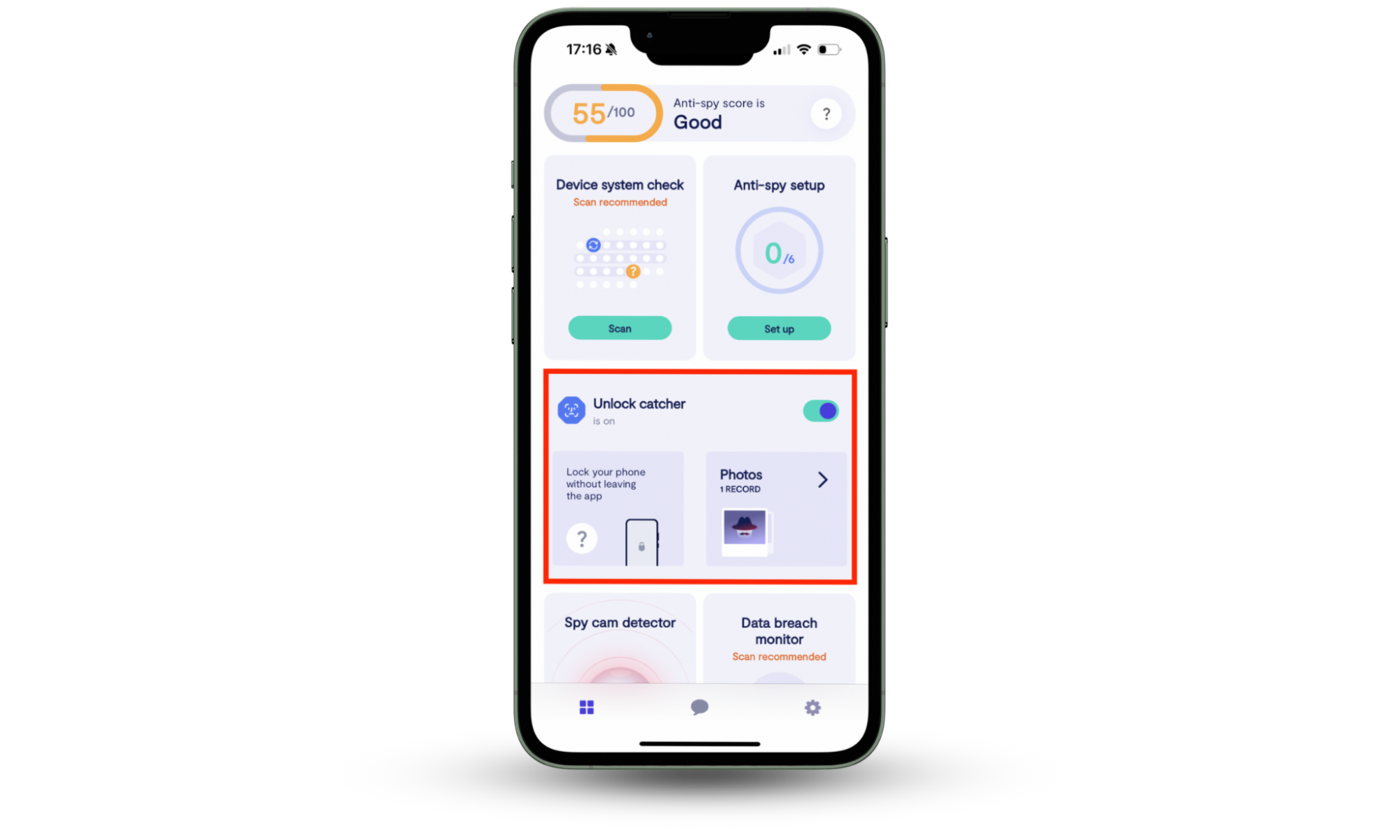
But there is a way to foresee and prevent this. Clario Anti Spy’s Unlock catcher will take photos of anyone who tries to access your phone, storing them in the app with timestamps. So, you can always see who was trying to snoop around. The intruder won't know he was photographed, so your secret stays safe.
Here’s how to use Unlock catcher:
- Download Clario Anti Spy on your mobile device and set up an account.
- Go to Unlock catcher feature and toggle the switch on (it will turn green).
- The app will store all the photos of those who tried to unlock your mobile device in a record.
Note
Due to narcissists' controlling needs, they may refuse to respect your boundaries to the point where they even engage in stalking. So, if you ended the relationship and suspect your ex might be stalking you, it is best to contact law enforcement. If you wonder if a husband can stalk his wife, the answer is yes, and it is illegal in the US.
4. Rebuilding self/self‑rediscovery
Did your ex-partner say your hair looked "hideous and ridiculous," and you felt pressured to alter it? Or maybe a family member would often tell you that your music lessons were "a waste of your energy" until you finally quit.
Narcissistic abuse can be so strong that it causes a deep disconnection from your true self. Redefining your interests, values, and dreams will aid in your recovery.
5. Hope, growth, and revitalization
Your energy and attention should be concentrated on what is within your control—the here and the now. Once trauma is no longer a dominating force in your life, you will be able to face new challenges with resilience, confidence, and empowerment, and take on new, healthy, transformative relationships. This stage of life is most foreseeable to include new goals, renewed trust, and the life one desires.
Practical strategies for healing from narcissistic abuse
To recover from narcissistic abuse, you need to avoid contact, resort to therapy or family and friends for support, take care of yourself via healthy food and physical activity, and rediscover forgotten hobbies and favorite activities.
1. Establishing boundaries
Narcissists break your boundaries because they seek full control over your life. That is why narcissists and stalking often go hand in hand. So, reinstating personal boundaries is the foundation of your recovery. This might entail going no contact with the abuser: blocking their social media, phone numbers, and emails.
2. Seeking professional help
Here are some areas where therapeutic support can help:
- control the desire to re-establish contact with the abuser
- end the cycle of a trauma-bonded relationship
- build coping mechanisms
- ameliorate trust in others
- manage depressive episodes or other similar psychological problems
3. Self‑compassion and self‑care
Of the many tactics narcissists use, blame-shifting is one of their favourites. Since victims get used to the feeling that everything is their fault, it can transcend into their future life even after separation. Resetting your brain to shake this feeling off can be quite a challenge. But you can do it with more self-compassion and less self-criticism, as well as doing what makes you feel accomplished.
4. Building healthy relationships and support networks
Leaving toxic settings can be immensely challenging, especially as they can be addiction-forming. Yet, healthy alternatives to the experience can be quite useful to break the pattern. An abuse survivor's group can be a good alternative. Validation through emotional and functional support of people who have gone through similar problems helps counter a person's feelings of isolation.
Conclusion
Narcissistic abuse can be incredibly harmful, and recovering from it may consume a lot of time and effort. The support of your family and friends can give you a sense of hope and purpose. Meanwhile, a professional therapist can give you guidelines on how to live a fulfilling life. Also, experiencing harsh emotions like grief and anger is a normal part of healing from narcissistic abuse. It will help you find the strength to accept the trauma and work on letting go of what happened to you.
To boost your digital privacy, use Clario Anti Spy’s Unlock catcher. It will take secret shots of those trying to unlock your phone. Meanwhile, Hidden app scan can help you protect your boundaries by detecting spyware or other malicious apps on your mobile device. Stay protected, stay safe!