Table of contents
- Definition and forms of emotional abuse
- Signs of emotional abuse
- 1. Blackmailing
- 2. Criticizing
- 3. Manipulating
- 4. Shaming
- 5. Accusation
- Impact of emotional abuse on victims
- How can you deal with emotional abuse?
- Feel like your privacy is being controlled?
- Conclusion
Definition and forms of emotional abuse
Emotional abuse is a repeated pattern of controlling, manipulative, or degrading behavior that harms a person's mental health and self-worth. It includes criticism, gaslighting, intimidation, and isolation, gradually eroding confidence and creating dependency.
What makes emotional abuse uniquely dangerous is its invisibility. There are no visible bruises—only internal shifts. You start questioning yourself, minimizing your own feelings, and adapting your behavior to avoid conflict.
In my experience, emotional abuse isn't defined by a single event. It's defined by a pattern that consistently makes you feel smaller, unsafe, or unsure of yourself.
Common forms of emotional abuse:
- Gaslighting: distorting reality so you doubt your memory.
- Isolation: limiting access to friends, family, or support.
- Control: monitoring behavior, decisions, or communication.
- Verbal degradation: subtle or direct attacks on self-worth.
- Emotional withdrawal: using silence as punishment.
If this escalates into control beyond emotions, like tracking or monitoring, read more about abusive ex stalking you.
Emotional abuse doesn't always stay emotional. In many cases, control extends to your phone, checking messages, monitoring apps, or accessing your device without permission.
If you feel like your privacy is being violated, you need to verify what's actually happening. Clario Anti Spy can help you check for hidden digital control. It detects suspicious apps and alerts you if someone tries to access your phone without your consent.
Here's how to check your device for hidden monitoring:
- Download Clario Anti Spy on your device.
- Open the Hidden app scan feature.
- Review any apps flagged as suspicious.
- Check your unlock history using Unlock catcher.
- Turn on the Unlock catcher to detect unauthorized access attempts.
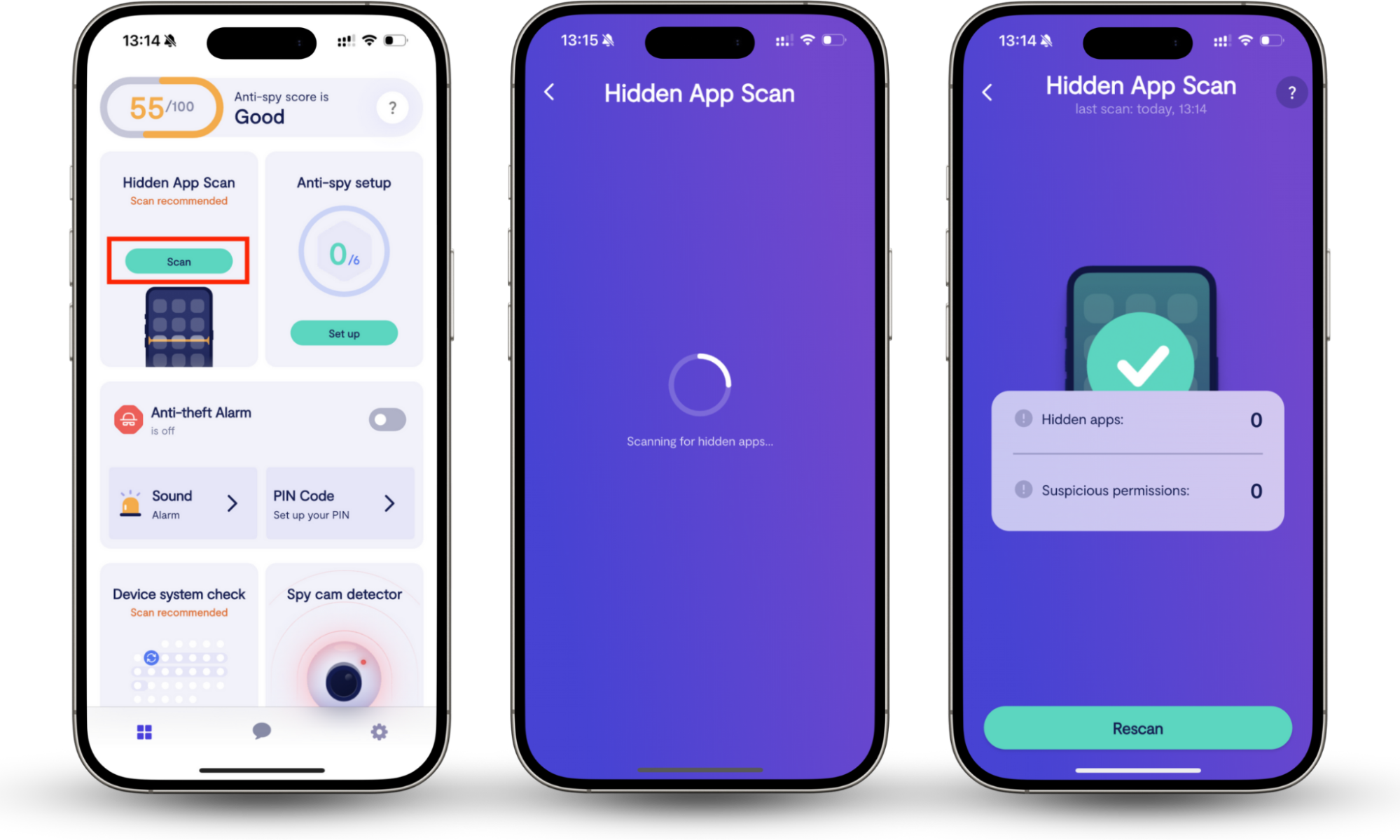
Now that you've checked your device, let's break down the signs of emotional abuse in more detail.
Signs of emotional abuse
Recognizing the signs of emotional abuse can be difficult because they often feel inconsistent. One day, things feel fine; the next day, you feel destabilized.
Signs of emotional abuse include persistent criticism, manipulation, control, and behavior that makes you feel anxious, confused, or inadequate. Over time, you may start walking on eggshells, overanalyzing your actions, or losing trust in your own judgment.
A key insight most people miss: It's not how they act on their best days, it's how you feel on your worst days around them.
1. Blackmailing
Emotional blackmail uses fear, guilt, or obligation to control you. Examples:
- If you leave, I'll hurt myself.
- If you loved me, you would do this.
- You're responsible for how I feel.
This creates a survival-based response; you comply not because you want to, but because you feel you have to.
Over time, this rewires your decision-making process.
2. Criticizing
Criticism in abusive relationships isn't about growth, but about control. It's often frequent, personal, and contradictory.
You're criticized for what you do, and for what you don't do.
This creates a no-win situation where you're always trying to fix yourself, but never succeed.
3. Manipulating
Manipulation includes gaslighting, denial, and emotional confusion. You may hear:
- That never happened.
- You're imagining things.
- You're overreacting.
The goal isn't to win the argument; it's to control your perception of reality.
This is why many victims struggle to explain what's happening. They feel it, but can't clearly prove it.
This dynamic is common in a trauma-bonded relationship, where emotional highs and lows create addiction-like attachment.
4. Shaming
Shame attacks your identity, not just your actions.
Instead of you did something wrong, the message becomes there's something wrong with you. Over time, this creates:
- Low self-esteem
- Social withdrawal
- Fear of judgment.
Shame is one of the strongest tools of emotional control because it makes you self-police your behavior.
5. Accusation
False accusations shift the dynamic of power. You may constantly need to:
- Prove your loyalty
- Explain your actions
- Defend yourself.
You move from being a partner to being under investigation.
In some cases, this escalates into digital monitoring or stalking. Learn whether a spouse can be charged with stalking.
Impact of emotional abuse on victims
Emotional abuse doesn't just affect how you feel. It affects how you think, behave, and exist in relationships.
Emotional abuse can lead to anxiety, depression, low self-worth, and long-term mental health challenges. Victims often experience hypervigilance, difficulty trusting others, identity confusion, and emotional dysregulation. Chronic stress can also impact sleep, immune function, and overall health, making recovery more complex without proper support.
But here's the deeper layer: The most damaging effect is the loss of self-trust.
You stop relying on your instincts. You second-guess your reactions. You look to the abuser to define what's real.
That's why leaving isn't just physical, it's psychological.
In some cases, emotional abuse overlaps with obsessive behavior. Understanding why narcissists stalk you helps you see the full pattern.
How can you deal with emotional abuse?
Dealing with emotional abuse requires both emotional awareness and practical protection. You're not just leaving a person, you're breaking a psychological cycle.
To deal with emotional abuse, recognize patterns, set boundaries, seek support, and protect your safety, both emotional and digital.
Steps to regain control:
- Name the behavior. Clarity breaks confusion. Once you label it, you can respond differently.
- Track patterns, not promises. Don't focus on apologies—focus on repeated behavior.
- Set boundaries and observe reactions. Healthy people respect boundaries. Abusers escalate.
- Rebuild external support. Talk to friends, a therapist, or support groups.
- Secure your digital environment. If control includes your phone, accounts, or location, you need protection.
If someone controls your behavior, they may also try to control your digital space: your phone, accounts, or location. This is more common than people realize, especially in emotionally abusive relationships.
Protecting your privacy is part of protecting yourself.
Clario Anti Spy helps you regain control by showing you what's happening on your device and alerting you to suspicious activity.
Here's how to secure your phone from unauthorized access:
- Download Clario Anti Spy on your device.
- Open Unlock catcher and enable notifications.
- Set up alerts for failed unlock attempts.
- Run a Hidden app scan to detect unknown apps.
- Remove or investigate anything that looks suspicious.
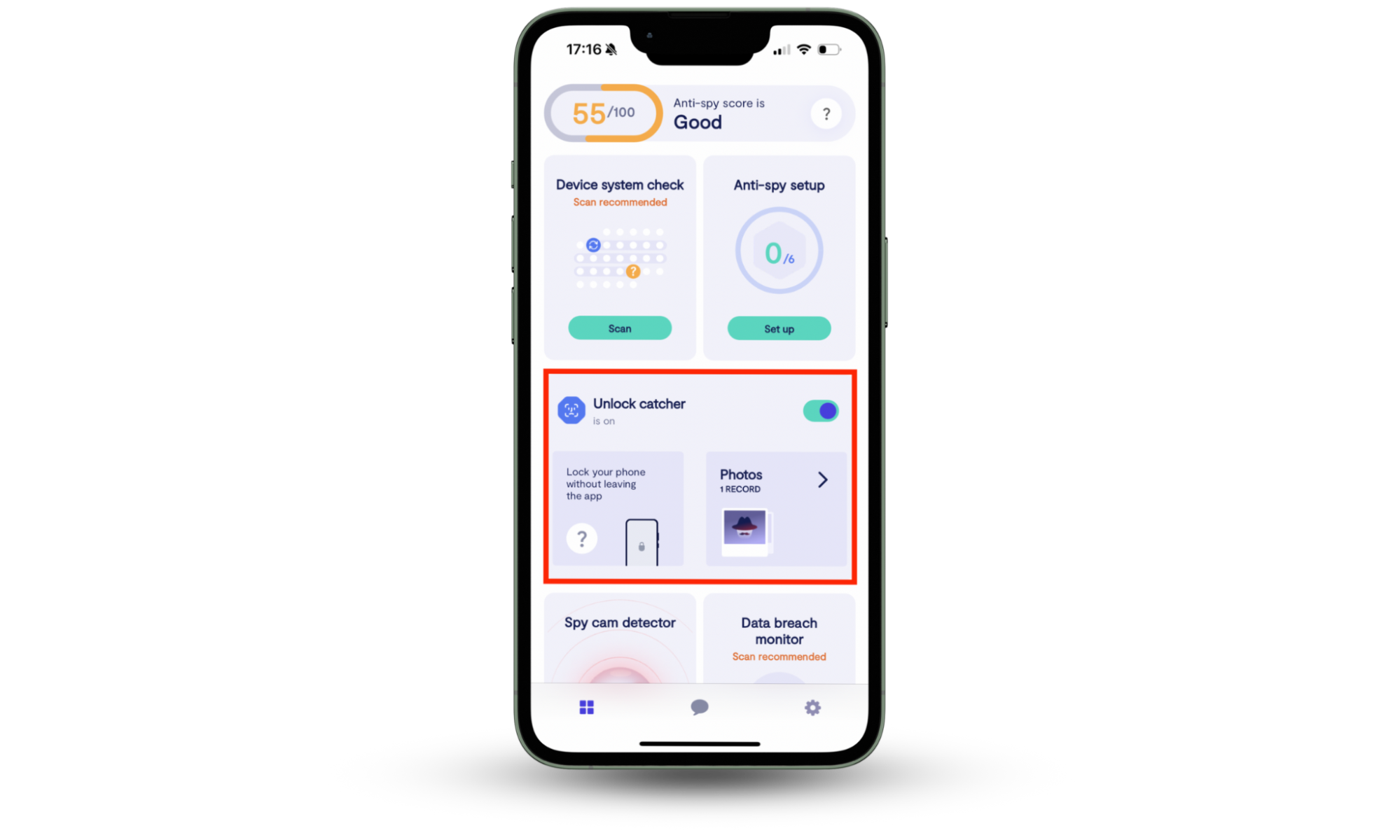
Once your digital space is secure, you can focus on rebuilding your emotional safety and boundaries.
Feel like your privacy is being controlled?
Emotional abuse often extends into digital behavior: checking your phone, reading messages, or tracking your activity.
Clario Anti Spy helps you regain control:
- Hidden app scan detects apps disguised to monitor your activity.
- Unlock catcher alerts you if someone tries to access your phone.
In situations where emotional control turns into digital surveillance, awareness alone isn't enough. You need visibility into what's happening on your device.
Clario Anti Spy gives you that visibility. If your situation involves control, monitoring, or invasion of privacy, protecting your digital space becomes part of protecting yourself.
Conclusion
Emotional abuse is a pattern, not a single moment. It erodes your sense of self quietly, over time, through criticism, manipulation, control, and shame. Recognizing it is the first step. Setting boundaries, seeking support, and protecting your safety, including your digital safety, are what come next.
If you suspect someone is monitoring your phone or accessing your accounts without permission, Clario Anti Spy's Hidden app scan and Unlock catcher can give you the clarity you need to act.