Table of contents
- Are there scammers on Bumble?
- Can you get scammed on Bumble?
- Common scams on Bumble
- How to identify Bumble scammer?
- What to do if you get scammed on Bumble?
- Conclusion
Are there scammers on Bumble?
Bumble app scams exist. Some profiles use photos lifted from real social media accounts to seem legitimate. These people usually make up convincing overseas jobs or travel plans, so you never get to see them. Others suddenly claim they need help with a crisis. The aim is usually money, intimate photos, or access to your accounts/data.
Bumble has photo verification and reporting tools that can flag such unusual behaviors. But it doesn’t stop everything. There are new profiles appearing every day, images get reused, and chats often move off the app beyond Bumble’s reach. These off-platform sites are usually used to harvest your data, hence why it’s important to know how to spot fake apps while dating online.
Can you get scammed on Bumble?
You definitely can, especially once a conversation moves off the official app. Scammers work hard to get you onto unmonitored platforms like WhatsApp or Telegram, where Bumble’s safety filters don’t matter. Once they have you there, they often deploy popular phishing scams by sending links to private galleries or fake social login pages to hijack your data.
These links are almost always traps. They’ll lead to a fake login page that looks like iCloud or Google, asking you to "verify your age" or log in with your Instagram account before you can see the pictures. If you enter your details, you’re literally handing over your account password to a hacker.
Other scams on Bumble are more technical in nature. Some involve fraudulent "verification" sites that appear to be official app extensions but actually scrape your credit card information. A match might even claim they need money for an emergency travel fee or a medical bill.
Common scams on Bumble
The most common types of Bumble scams range from emotional manipulation by con artists to technical traps designed to steal your wallet or data. You’ll likely see catfishing, where users hide behind fake or AI-generated photos to ask for money for fake emergencies, and "pig butchering" schemes that pressure you into fake crypto investments. You might also come across romance scams, phony verification links, and sugar daddy scams.
No matter the type, the end goal is the same: to coerce you into either sending money or giving up your personal data.
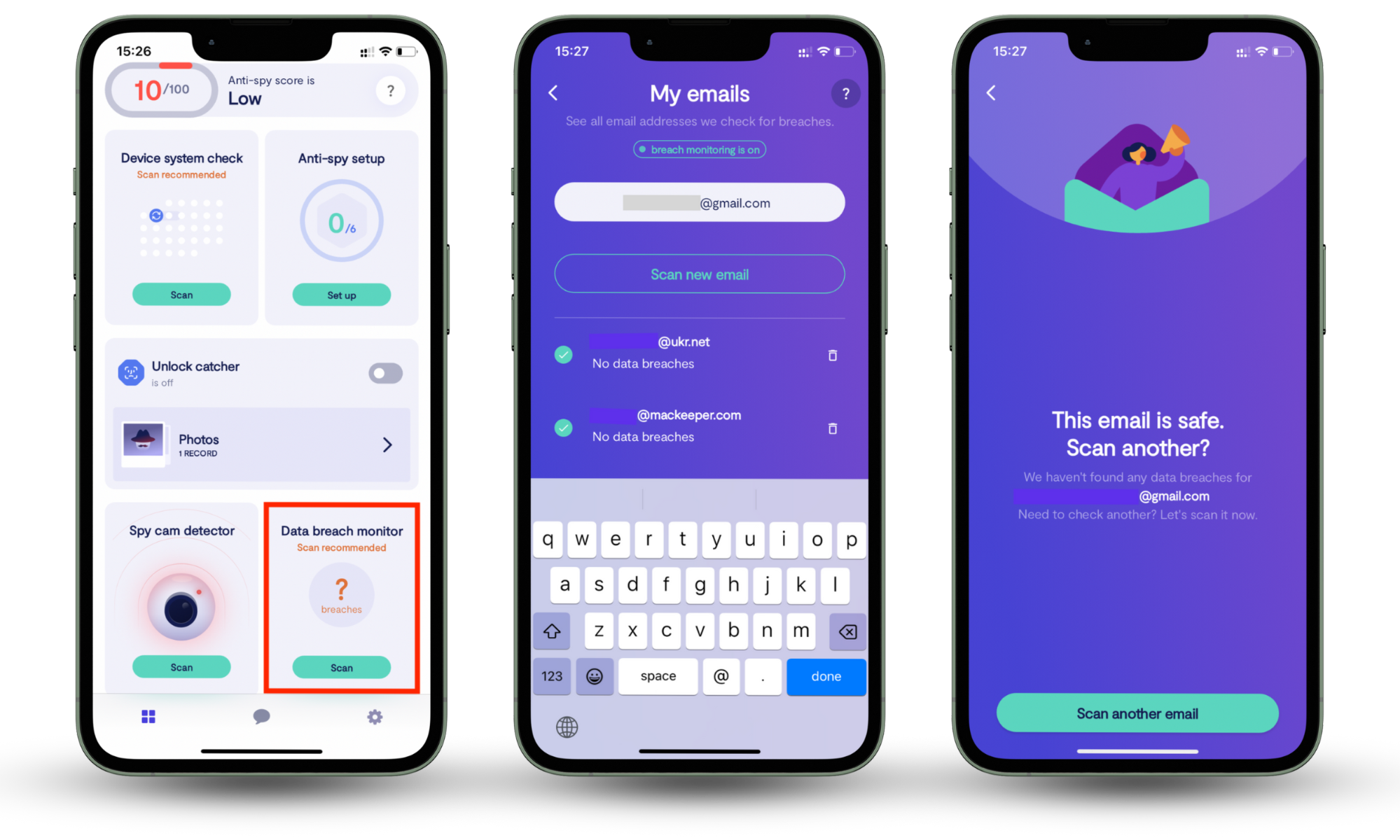
If you’ve already entered your email or password into a suspicious site, you need to know exactly what was exposed before a scammer can use it to hijack your other accounts. Clario Anti Spy’s Data Breach Monitor scans the dark web for your credentials so you can secure them immediately.
Here’s how to check if your email’s been involved in a data breach:
- Download Clario Anti Spy and open an account.
- Open your Clario Anti-Spy app and tap Scan on the Data Breach Monitor feature.
- Enter the email address you used on the suspicious site.
- Press Done or Enter on your keyboard.
- Check the results and follow any instructions to protect your data.
How to identify Bumble scammer?
The most common way to identify a Bumble scammer is to see whether they’d refuse to prove they are real people (via video call or an in-person meet). Even though Bumble has built-in verification tools, con artists use stolen images and AI to bypass these checks. And it’s not just Bumble that’s fooled either. A 2025 study by Pour Moi found that 62% of people could not tell a real dating profile from an AI-generated one, proving that you can no longer rely on your gut instinct to spot a fake. Other ways to check if a match is fake are if they coerce you to move offline or start telling you sob stories from the get-go.
Ways to check if someone is a Bumble scammer:
- Reverse image search: Don't just look at their photos. Drop their profile pictures into Google Images or TinEye. If that "candid" shot belongs to a random model or shows up on a stock photo site, they are a catfish.
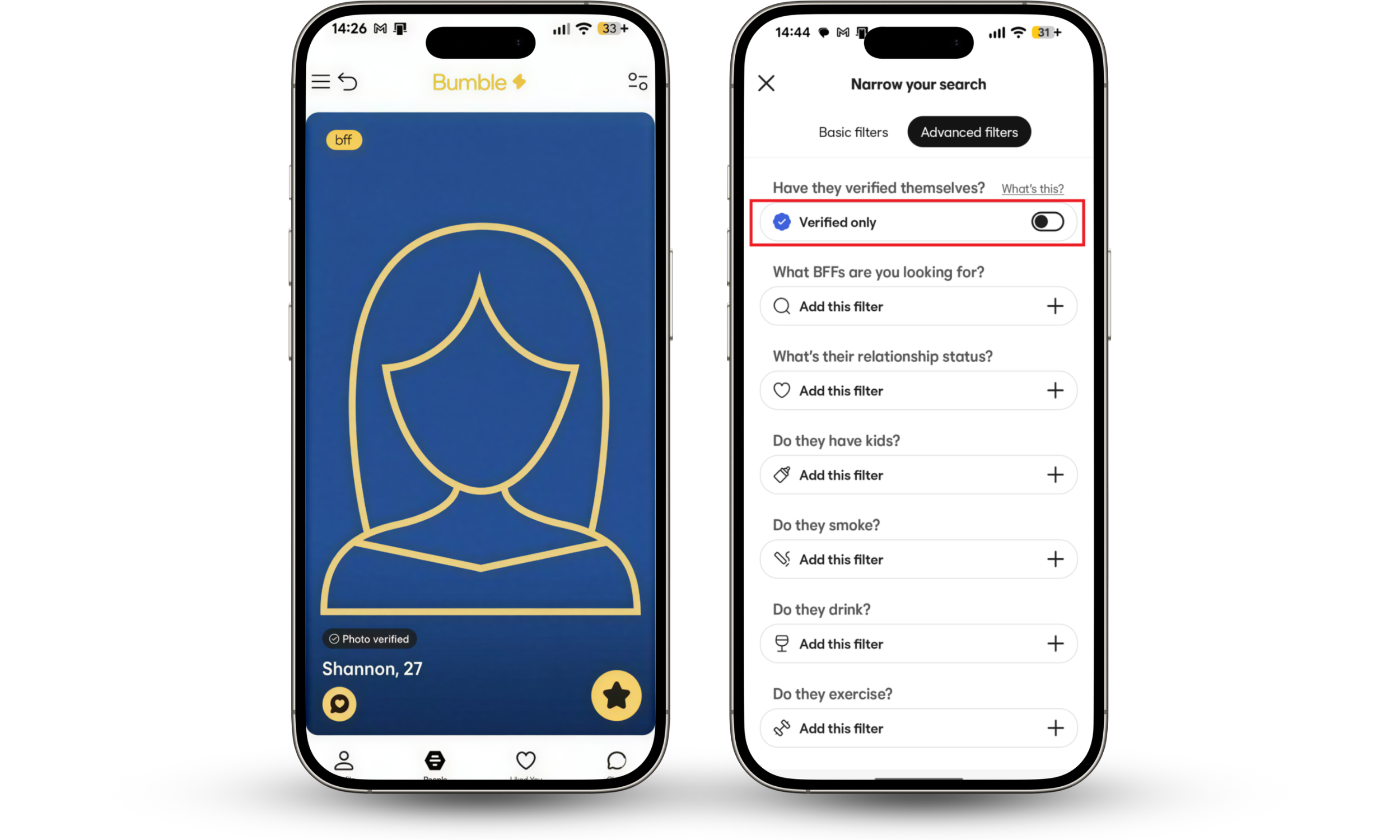
- Check their verification tier: Look closely at the badge next to their name. A white checkmark in a scalloped circle only means they passed a basic photo selfie check. A blue scalloped badge with a white checkmark is much safer, as it means they’ve uploaded a government ID and passed a biometric face scan.
- Audit their socials: If they send you an Instagram handle, check the follower list. Profiles with zero tagged photos, no real comments, and a follower list full of bots are common signs of Bumble app scams.
- Watch for video glitches: If you do get them on a call, look for weird blurring around the mouth or eyes. Scammers are increasingly using deepfakes in popular phishing scams to bypass real-time identity checks.
- Watch for "The Ask": The ultimate confirmation is a request for money, gift cards, or crypto for a sudden emergency. No matter how convincing the story is, a real match will never ask a stranger for financial help.
What to do if you get scammed on Bumble?
Stop all contact immediately and do not send any more money. Use Bumble’s "Block & Report" tool to alert their safety team, then contact your bank to secure your accounts and report the fraud.
You also need to look at what you shared during the scam. If you shared a password or clicked a suspicious link, change your login details for your email and bank apps right away.
If you sent any money via wire transfer, gift card, or crypto, call your bank's fraud department immediately. It is usually hard to get that money back, but they can freeze your accounts to protect whatever is left.
You also have to deal with the technical fallout on your phone. Beyond checking for leaked credentials with Clario Anti Spy’s Data Breach Monitor, you should run a full sweep of your device to make sure the scammer didn't leave anything behind. Clario Anti Spy can help here, too.
- Device System Check quickly shows if your phone is running outdated software or has security settings that make it easier for scammers to get in.
- Hidden App Scan helps you spot spyware or monitoring apps that sometimes get installed through shady downloads or fake “verification” tools.
- 24/7 Expert Assistance lets you talk to a security specialist if you’re not sure what the scammer may have accessed or what you should secure next.
Finally, make it official by saving the messages and filing a report with the FBI’s Internet Crime Complaint Center (IC3) in the US or Action Fraud in the UK. These reports are the only way law enforcement can actually track down the groups running these popular phishing scams.
Conclusion
The truth is, dating apps are built on trust, and that’s exactly what scammers exploit. You shouldn't have to spend your time playing detective just to find a date. If you've got a bad feeling about a link you clicked from a match that’s acting strange, don't just sit with the anxiety. Take back control of your privacy and clear your phone of hidden threats with Clario Anti Spy.