Table of contents
- Why are women underrepresented in cybersecurity?
- What skills do women bring to cybersecurity?
- Becky Pinkard
- Scarlet Jeffers
- Lisa Kearney
- Rosanna Kurrer
- Jenn Diesi
- Top things women accomplished in cybersecurity in 2025
- Conclusion
There should be no place for gender-specific jobs in 2025.
Yet only 25% (!) of the cybersecurity workforce is made up of women. Meanwhile, the industry is facing a massive shortage of professionals, with over 4 million cybersecurity positions unfilled worldwide to be unfilled by 2025. And though women are not considered “good in Science, Technology, Engineering and Mathematics (STEM),” they can and are ready to overturn this negative perception.
In fact, gender-diverse teams make better decisions than their all-male counterparts. Women consistently perform well in cybersecurity roles because the field increasingly relies on analytical thinking, attention to detail, communication skills, and risk assessment — strengths that are critical for identifying complex, human-driven threats such as phishing, fraud, and social engineering. On top of that, women-led teams achieve 12% higher revenue than the male-led ones. Pretty impressive right?
Why diversity directly improves cybersecurity outcomes?
Diversity is especially important in cybersecurity because attackers exploit blind spots in thinking. Teams with varied backgrounds are better at anticipating unconventional attack methods and responding effectively under real-world pressure.
Cybersecurity today is no longer a purely technical discipline. Modern security teams rely on psychology, product thinking, user behavior analysis, and risk communication — areas where professionals from non-traditional STEM backgrounds often excel. As cyber threats become increasingly human-centric, inclusive teams are better equipped to anticipate real-world attack patterns rather than theoretical vulnerabilities.
Why are women underrepresented in cybersecurity?
Women are underrepresented in cybersecurity not because of a lack of ability, but due to long-standing stereotypes, limited visibility of role models, and workplace cultures that historically favored linear technical career paths. Many women enter the field laterally from psychology, design, or operations — paths that were previously undervalued despite being highly relevant to modern security work.
What skills do women bring to cybersecurity?
Women in cybersecurity often bring cross-functional skills such as behavioral analysis, user advocacy, crisis communication, and systems thinking — all of which are increasingly essential as security shifts from purely technical defense to human-centered risk prevention.
To highlight and personalize these figures, we’ve cherry-picked five female cybersecurity experts. Their incredible careers and achievements demonstrate that viewing cybersecurity as a male-only industry is based on the old-fashioned status quo, not on scientific evidence. Enjoy reading and be inspired by the women who have helped transform our cybersecurity landscape.
Becky Pinkard
Becky Pinkard is the Chief Information Security Officer (CISO) at the Aldermore bank. She is also a co-founder of the “We Empower Diversity Startups” group (WEDS), a monthly podcast host, and a CyLon mentor, providing cybersecurity guidance to entrepreneurs. She has also shared her expertise in various books, publications, and live interviews.
Despite an impressive track record in tech, she began her career path as a … psychology graduate. But her passion for tech really exploded when she worked for a travel agency straight after college. Helping her older colleagues work on their computers, Becky realized what she wanted to do.
With limited studying options in computing back in 1995, Becky surrounded herself with books, asked questions, and worked her way up by offering help and advice whenever possible. As a result, she was headhunted to the UK to be Global Head of Attack at Barclays, then later becoming CISO of Aldermore.
Career transition insight
Becky’s career path reflects a growing industry trend: many of today’s most effective cybersecurity leaders began in non-technical disciplines, bringing broader analytical and human-centric perspectives into security leadership.
As a woman who has progressed from being a psychology graduate to a top international CISO, Becky knows what it means to swim against the tide. To help other women just starting out on their tech careers, she co-established WEDS, a network of women who realize the importance of diversity and inclusion in tech.
“I want women to know that they are just as deserving as men, that if you don’t ask you don’t get — and that it’s okay to not know what you want to do with your life,” she says.
Scarlet Jeffers
A physicist by training, Scarlet is an experienced product & UX/CX executive and a former VP of experience at Clario Tech. She is a driving force behind our main product: a privacy and security solution enabling users at all levels of tech literacy to secure their digital lives. She uses her broad expertise in product management, UX/UI, CX, and leadership to make the product seamless and user-friendly.
Product & UX relevance
This blend of cybersecurity and user-experience expertise has become increasingly critical as security tools must now balance strong protection with accessibility for users of all technical skill levels.
Scarlet’s track record is beyond impressive. She started out in her late teens as a customer experience specialist at Apple. Since then, for ten years, her career has seen her work as an IT digital consultant, management consultant, product director, product & CX consultant, and CX director. No wonder she’s the youngest professional featured in Top 10 Women to Watch in Tech and STEM 2020 — an annual list of the UK’s most exciting female leaders to follow.
Having experienced the ups and downs of working as a female expert in tech firsthand, Scarlet is an active advocate for women in tech. Striving to diversify this male-dominated environment, she has hosted many tech events championing female professionals in the sector. And to top it off, she empowers future generations as a volunteer at Northern Ireland STEM.
Lisa Kearney
Lisa Kearney has been in cybersecurity for 24 years, offering her services to thousands of companies around the globe. She runs her own consulting practice and founded Women CyberSecurity Society (WCS2). This provides services and support for women with ambitions in cybersecurity.
The idea of establishing WCS2 was triggered by an incident two years prior. Back then, Lisa was appointed Director of Product Security at a British Columbia firm. During a staff meeting, her male colleague said, “Don’t worry about attending this meeting, it’s technical.” “You can attend (the meeting), but in listen-only mode,” her boss said.
Expert's insight
Incidents like this highlight one of the key challenges facing the cybersecurity industry today: not a lack of talent, but structural barriers that prevent experienced professionals from being fully heard and utilized.
Soon after this eye-opening moment, Lisa left the firm to found WCS2. “The impetus for starting the Women Cybersecurity Society was to raise awareness of the challenges for women in the industry and the high exit rate,” Kearney said.
In addition to WCS2, Lisa founded the International Women in Cyber Day — a global campaign dedicated to raising awareness of the unique challenges for women in cybersecurity. The initiative aims to find solutions to eliminate these challenges, and celebrate women’s achievements within the industry.
“Women are great multitaskers, they’re great investigators, and they pay great attention to detail,” Kearney said. “Let’s include women and let’s provide support. Let’s become aware of the issues, have a conversation and discuss the difficult things that need to be discussed and acknowledged. Then, let’s build a solution. It is the only way forward.”
➡️Follow Women CyberSecurity Society on Twitter
Rosanna Kurrer
Rosanna Kurrer is a design thinker, accomplished public speaker, and a leading tech woman. A co-founder of the Digital Leadership Institute, Rosana has also co-initiated CyberWayFinder — a program dedicated to bringing diversity in cybersecurity. As a certified MIT Master Trainer in Educational Mobile Computing, Rosanna conducts seminars on design thinking, corporate innovation, and coding.
Her background is international. After studying Architecture in the Philippines, she completed a Master in Architecture Engineering in Japan and moved to Germany with her partner. Rosanna admits that the migration was challenging professionally:
Germany is very conservative when it comes to mothers. If you are single, it’s fine. But if you have children … They have this expression called “Rabenmutter” which means a raven’s mother, a woman who works and “abandons” her children … It basically expresses the question ‘Why do you have children if you work?
Later, Rosanna moved to Brussels and co-founded DLI. She noticed that women do not stay long in the tech field, mainly because of the all-male environment where they feel out of place. Women need a community, a need DLI addresses.
“Women tend to speak up less up when there are men in the room, especially when it comes to technical matters,” Rosanna says. Well, DLI strives to create a safe place for women where they can speak confidently without any fear of being judged.
Though DLI has helped and continues to help lots of women, Rosanna didn't stop there. Three years later, she quit DLI and co-founded CyberWayFinder — a three-year training and mentorship program aiming to bring diversity to cyber teams. Notably, CyberWayFinder goes beyond gender issues: the program strives to increase age and cultural diversity as well.
“There are usually women of all ages in our program and from different educational backgrounds, different sectors, and they also come from different cultural backgrounds. The goal is, therefore, broader than to bring more gender equality to cybersecurity. It is really to bring more diversity”, Rosanna says.
Industry insight
Beyond gender, cybersecurity increasingly depends on age, cultural, and professional diversity. Teams composed of varied backgrounds are more resilient against modern threats such as social engineering, deepfake-enabled fraud, and AI-driven phishing — attacks that exploit human behavior rather than technical weaknesses.
Jenn Diesi
Jenn Diesi is a self-taught tech veteran who’s been in tech for over 20 years, protecting networks for global companies. She’s the founder and CEO of Geek Girl Tech. While providing security and compliance solutions to mission-driven and socially conscious businesses, this company is dedicated to creating career opportunities for underrepresented people in the field.
Jenn embarked on a tech career when she was a 17-year old school graduate with a six-month old daughter on her hip. Driven by the necessity to support her baby, Jenn signed up at a technical trade school. During her study, she got a job at Motorola, where she met the person who “ushered” her into the world of IT. Almost a decade later, Jenn became the first security engineer at Life Technologies.
Ten years ago, she founded Geek Girl Tech. According to Jenn, the modern tech industry doesn’t represent the world’s diversity. Instead, it is alienating for technically minded professionals who are not white or male.
“Although I could have stayed in this type of environment making tons of money, I needed to move on and “be the change,” Jenn writes. Geek Girl Tech economically empowers all people underrepresented in tech, including women, people of color, LGBTQ+, and everyone who craves for equality in the workplace. And by the way, Loren, her 28-year-old daughter, helps run the company as the Chief Impact Officer and Operational Engineer.
Top things women accomplished in cybersecurity in 2025
In 2025, women continued to shape the cybersecurity industry in visible and measurable ways. Their impact went far beyond representation, influencing how security products are built, how threats are addressed, and how organizations think about risk.
Key contributions women made in cybersecurity in 2025 include:
- Leading security strategy at enterprise scale
Women increasingly held CISO, VP of Security, and product security leadership roles, guiding organizations through complex challenges such as AI-driven threats, cloud security governance, and regulatory compliance.
- Driving human-centered security design
Many of the most successful security and privacy tools in 2025 emphasized usability, clarity, and trust — areas strongly influenced by women working in UX, product management, and customer experience within cybersecurity teams.
- Advancing defense against social engineering and AI-enabled attacks
As phishing, deepfake fraud, and impersonation attacks grew more sophisticated, women played a key role in developing detection strategies that focused on behavioral analysis and real-world attack patterns.
- Expanding access to cybersecurity careers through mentorship and reskilling
Women-led initiatives in 2025 focused on mentorship, career switching, and inclusive training programs, helping address the global talent shortage by opening pathways beyond traditional STEM-only pipelines.
- Shaping cybersecurity culture and retention
Beyond technical outcomes, women influenced how cybersecurity teams operate — advocating for sustainable workloads, collaborative incident response, and inclusive decision-making, which directly impacts long-term team performance and retention.
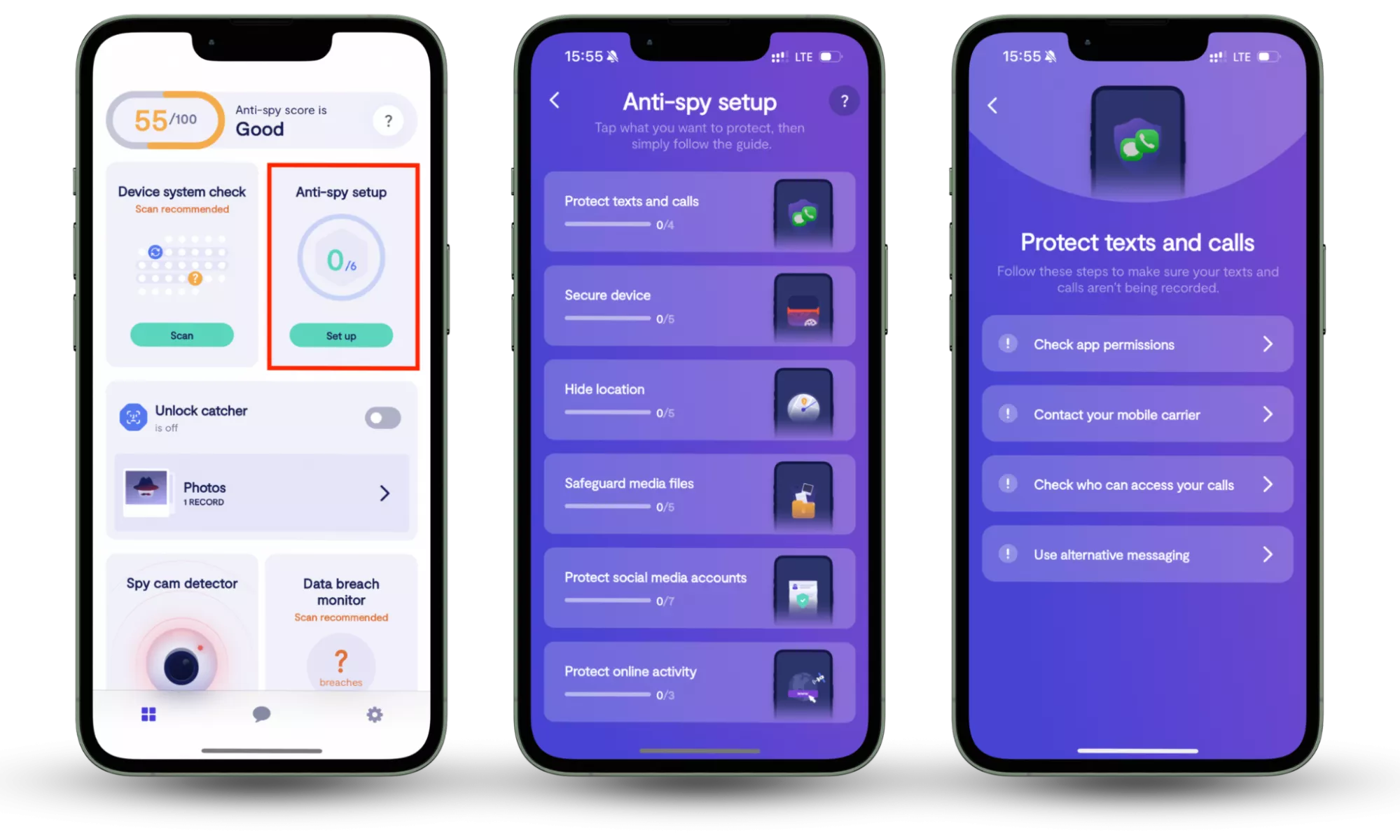
A clear example of this human-centered approach is the growing focus on preventative anti-spyware practices. Solutions like Clario Anti Spy reflect this shift by guiding users through essential privacy actions rather than relying solely on passive detection. Its Anti-spy setup feature walks users through a structured checklist to apply critical privacy settings, reduce unnecessary permissions, and minimize exposure to spyware — making advanced privacy protection accessible even to non-technical users.
Here is how you can use Clario Anti Spy's Anti-spy setup feature:
- Download Clario Anti Spy, create an account, and sign in.
- Under the Anti-Spy setup section, select Set up.
- Follow the step-by-step guide to secure your devices and minimize your exposure to spyware, ensuring better protection against malware and other digital threats.
Conclusion
With so many inspiring female cybersecurity experts out there, compiling this list was as challenging as choosing the most outstanding stars in the sky. And the fact that this universe of talents is less than 20% of the cybersecurity workforce seems unbelievable.
Obviously, cybersecurity has something of a perception problem, but, as the facts suggest, women are ready both to address the prejudice challenge and to mend the cybersec workforce gaps. At the same time, protecting digital privacy cannot remain the responsibility of experts alone. As threats become more subtle and user-driven, tools like Clario Anti Spy reflect the same inclusive approach — helping everyday users strengthen their privacy through guided anti-spy setup steps that reduce exposure to spyware without requiring technical knowledge.
Read more: