Table of contents
- Is Hinge scam?
- Are there scammers on Hinge?
- Common types of Hinge scams
- 1. Financial and emergency scams
- 2. Romance and emotional manipulation scams
- 3. Crypto and investment scams
- 4. Phishing and malicious links
- 5. Sextortion and blackmail schemes
- Warning signs of scam on Hinge
- Safety measures on Hinge
- What to do if you encounter scams on Hinge?
- Summary
Is Hinge scam?
Hinge isn’t a scam. It’s a legitimate dating app, with around 30 million users. However, there are plenty of scams on Hinge, as with any dating app.
You can join Hinge for free, though paid subscription options are also available. Hinge positions itself as a dating app for people looking for long-term relationships. Lots of people have found love there. In 2017, it was the most-mentioned website in the Weddings section of the New York Times.
Are there scammers on Hinge?
Unfortunately, there are scammers on Hinge. Dating scammers usually want your money. They might talk to you for weeks or months, gaining your trust. They’ll use fake photos and lie about their identity, and often make up emergencies to beg for cash.
All dating apps attract scammers. After all, people looking for love have a huge potential of falling victim. You’re going to share personal information with your matches, and when you share personal details online, you’re putting yourself at increased risk of scams.
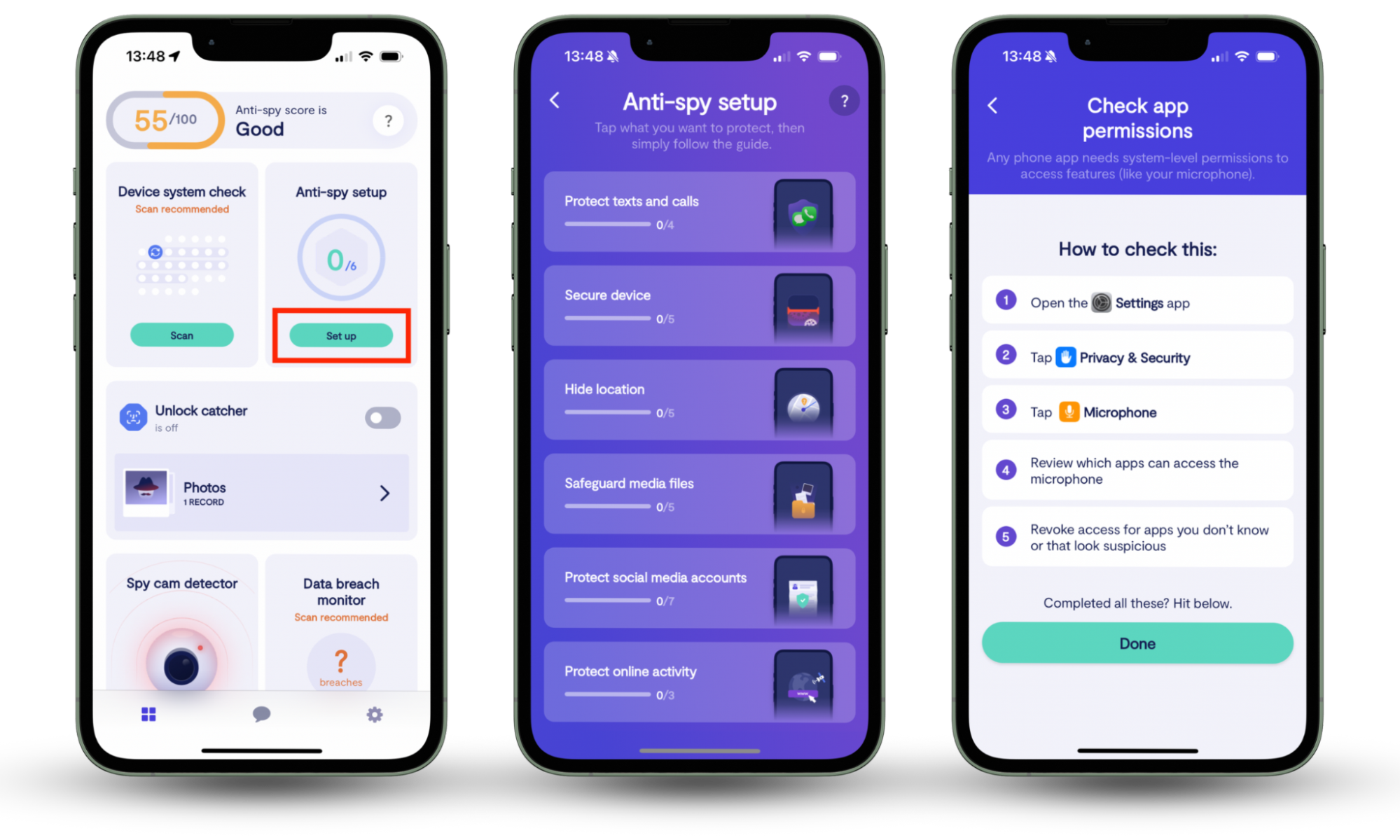
This doesn’t mean that you should avoid dating apps. Instead, you should make sure that your devices and online accounts are secure, so scammers can’t access them. Clario Anti Spy’s Anti-Spy setup can help you here. The app walks you through how to protect your phone and online accounts to reduce the risk of identity theft and hacking. When you improve your phone’s security, you’ll see it reflected in your Anti-spy score.
A customer recently contacted the Clario support team, concerned that their Anti-spy score appeared low. One of the Clario experts talked them through the app’s recommendations, and their score soon improved along with their device protection.
How to check your phone’s security with Clario Anti Spy:
- Download Clario Anti Spy and set up a subscription.
- Under Anti-spy setup, tap Set up.
- Tap each section in turn and follow the on-screen instructions.
- When you’ve completed each section, tap Done.
Common types of Hinge scams
Scams on Hinge are usually designed to get your money in the form of a loan or a gift. Some scammers claim to have an emergency and need cash urgently, or tell you to send money so they can invest it for you. Some might ask for intimate photos and then blackmail you. They might lie about their identity, or even send you links to malicious websites.
1. Financial and emergency scams
Some scammers will ask you to send money to help them. They might claim that they’ve had an emergency, that their car has broken down, that someone stole their credit card, or that they have emergency medical expenses.
However, if you send them money once, they’ll take advantage of your generosity. Soon, they’ll have another emergency, and they’ll ask for more cash.
2. Romance and emotional manipulation scams
Your match might not be who they say they are. Scammers often lie about their identity. Lots of fraudsters pretend to be in the military and use stolen photos to make their stories seem more authentic.
These scammers won’t ask for money immediately. Instead, they’ll keep you talking online. They might claim they can’t meet up because they’re stationed overseas, or they can’t video chat because they live on a military base.
Romance scammers might spend weeks or months gaining your trust. Once they know that you’re invested in the relationship, they’ll ask for money.
3. Crypto and investment scams
Some scammers will convince you to invest in cryptocurrency or other risky financial opportunities. However, you won’t see any return on your investment; instead, you’ll lose everything you gave them.
They’ll pretend to be rich and successful, and tell you that you can make lots of money too, if you follow their advice. Unfortunately, you won’t; they’ll just keep your money.
4. Phishing and malicious links
Some scammers will send you links to malicious websites. These sites might automatically install malware or ask you for some personal information. If you fill in these details, a scammer could have enough information to drain your bank account or access your online accounts.
You might know to avoid clicking on links in a phishing email from a stranger. However, when you’ve been talking to a potential match for a while, you start to trust them. If they send you a link, you’ll probably click on it, especially if they tell you it’s a link to their Facebook page or a local restaurant they’d like to visit with you.
5. Sextortion and blackmail schemes
A scammer might encourage you to share intimate photos or videos, and then use them as blackmail. They may threaten to publish your photos unless you pay them, or send them to your family, your friends, or even your boss.
Sometimes, a blackmailer will send private photos to you first, to encourage you to send pictures to them. However, their images won’t be genuine—they might be AI-generated, found on adult websites, or even photos from previous scam victims.
Warning signs of scam on Hinge
You should look out for the warning signs of Hinge scams. Be cautious of new profiles with glamorous and model-quality images, or of someone who avoids video calls. Scammers might also try to move the relationship forward too fast or ask for intimate photos. Of course, if they ask for money, they’re also likely to be scamming you.
If you’re worried that your Hinge match is a scammer, ask yourself some questions:
- Does their profile look too good to be true, with model-quality photos? They might be a scammer, using stolen stock photos, or even AI-generated images.
- Is their profile marked as new? Their old profile might have been banned for scamming.
- Are they moving the relationship too fast? Perhaps they told you they loved you very quickly, or asked for intimate photos. This could indicate that they’re trying to build your trust quickly, perhaps before asking for money or blackmailing you.
- Is their phone number different from their supposed location? If they call you, check their phone number. Is it a local number, or is it from one of the five area codes you should never answer? If it’s not what you expect, it could be a sign that they’re lying to you.
- Did they quickly ask to start talking with another messaging service? They might want to move off-app to avoid being reported to Hinge for scamming.
- Do they avoid video calls or requests to meet up? If they always have a reason why they can’t meet you, it could indicate that they’re not who they say they are. It could also be that they’re genuine, but they just aren’t that interested in you. Whatever the reason, if they won’t meet up with you, it’s best to move on.
- Have they sent links in messages? These could be links to malicious websites. Familiarize yourself with some of the most popular phishing scams, so you can keep yourself safe.
Have they asked for money? This is the most obvious sign of a scammer.
Obviously, there are innocent explanations for some of these answers. They might be a genuine new user, or they might be ill and can’t meet up right now. However, if you see multiple red flags, you might be talking to a scammer.
Safety measures on Hinge
There are a few screening measures you can take to reduce your risk of being scammed on Hinge. Look for profiles with verified selfies, ask your matches to video chat with you, and stick to messaging within the app. Don’t share too much personal information, and never send money to a Hinge match.
- Ask people to video chat. A quick video call will let you check whether they’re using someone else’s photos.
- Use Hinge’s built-in security features. If a profile has a Hinge-verified selfie, they’re more likely to be legit. Also, keep your conversations on the app at first. Hinge’s message filters can detect suspicious behavior.
- Be careful when sharing personal information. Where do scammers get your information? It’s often from comments or messages you’ve sent online. Don’t tell anyone your full name, street address, passwords, or bank details.
- Research your Hinge match. Search for them on Facebook, LinkedIn, and other social media sites. Make sure they’re a real person.
- Never send money to anyone on a dating app.
What to do if you encounter scams on Hinge?
If you’ve been scammed, stop messaging the scammer straightaway and report them to Hinge. If you’ve sent them money or shared your financial information, contact your bank immediately, and look out for any unexpected transactions in your account. Report the crime to the police or the FTC (Federal Trade Commission).
You can report a scammer on the Hinge website, using the Submit a Request form. Choose Safety and Reporting as your reason, and include as many details as possible. You can also report a user directly from their profile page. Simply click the three dots at the top of their profile and tap Report.
You should report fraud to the FTC online. If you’ve lost money to a Hinge scam, they’ll explain the next steps to get your money back.
Summary
Unfortunately, there are scams on Hinge. Some scammers will lie about their identity, encourage you to invest in fake schemes, or blackmail you.
Familiarize yourself with the warning signs of dating scams: perfect profile photos or AI-generated images, asking for intimate pictures, refusing to video chat or meet up, and, of course, asking for money. Don’t share too much personal information with your Hinge match, and research them on social media. Are they a real person or are they lying to you?
If you’re worried about being scammed online, make sure that your phone’s security is up to date. Clario’s Anti-spy setup can help you keep your phone and online accounts safe from scams.