Table of contents
- What is identity theft?
- Warning signs of identity theft
- How identity theft happens
- Common types of identity theft
- Practical identity theft prevention tips (real-life examples)
- 1. Don’t provide your Social Security number unless necessary
- 2. Keep your Social Security card safe
- 3. Don’t leave your documents in the car
- 4. Get a lock for your mailbox
- 5. Be cautious about identity theft notifications
- What to do if your identity is stolen
- Conclusion
Today, we’d like you to meet five people. They’re all different but what unites them is their immediate experience with a crime called identity theft. Victims and an offender share their stories so that you know what to watch out for.
Identity theft can happen in multiple ways, including data breaches, stolen documents, phishing scams, and even physical mail theft. Understanding how these attacks occur—and what warning signs to watch for—is essential to preventing long-term financial and legal damage.
What is identity theft?
Identity theft is a type of fraud when someone uses your personal information to impersonate you and gain something from it. Scammers are usually looking for a victim’s full name, date of birth, Social Security number (SSN), driver’s license, passport, and so on. They use these records to access credit, shift a breach of law, and more. Consequently, victims have to invest a lot of effort to prove they aren’t responsible for these misdemeanours. It may take years to repair the damage.
Guidance from organizations such as the Federal Trade Commission emphasizes that identity theft can involve both financial fraud and misuse of personal data in legal or medical contexts, making early detection and prevention essential.
No one would want to fall prey to these scams. However, identity theft is becoming increasingly widespread. In the US alone, there were nearly 1.4M official ID theft complaints in 2021. We hope you won’t ever need to file such a complaint so have put the following practical tips to help you and your identity stay safe.
Warning signs of identity theft
Identity theft often goes unnoticed until financial or legal consequences appear. Early warning signs include unfamiliar transactions, unexpected account activity, or communications about accounts you did not open. Recognizing these indicators quickly can help limit damage and speed up recovery.
Common warning signs include:
- Unknown charges or withdrawals on bank or credit accounts
- Bills or collection notices for accounts you never opened
- Sudden drops in credit score without clear reason
- Missing mail, especially financial documents
- Notifications about password or account changes you didn’t request
These signs may appear gradually, making them easy to overlook without regular monitoring.
Note
Some identity theft cases remain undetected for months or years, especially when criminals use information slowly to avoid detection.
How identity theft happens
Identity theft typically occurs when criminals obtain and misuse personal information such as Social Security numbers, bank details, or identification documents. This can happen through digital attacks like phishing and data breaches, or physical methods such as mail theft and lost documents. Understanding these methods helps reduce exposure and prevent unauthorized access to your identity.
Cybersecurity frameworks, including guidance from the National Institute of Standards and Technology, highlight the importance of minimizing exposure of personally identifiable information (PII) to reduce the risk of identity-based attacks.
The most common ways identity theft occurs include:
- Data breaches: Hackers access databases containing personal information from companies or institutions
- Phishing scams: Fraudulent emails, texts, or calls trick victims into revealing sensitive data
- Stolen mail: Bank statements, tax documents, or bills are taken from unsecured mailboxes
- Lost or stolen documents: IDs, passports, or Social Security cards fall into the wrong hands
- Social engineering: Criminals manipulate victims into voluntarily sharing personal details
In many cases, attackers combine multiple methods to build a complete identity profile.
Important to know
Identity theft does not always require direct interaction with the victim—many attacks rely on previously leaked or publicly available data.
Common types of identity theft
Identity theft can take several forms depending on how stolen information is used. The most common types include financial fraud, medical identity theft, criminal impersonation, and synthetic identity fraud. Each type affects victims differently and may require different recovery steps.
The main types of identity theft include:
- Financial identity theft: Opening credit accounts or making purchases in your name
- Medical identity theft: Using your identity to receive healthcare services
- Criminal identity theft: Providing your identity when interacting with law enforcement
- Synthetic identity theft: Combining real and fake information to create new identities
Each type can result in different financial, legal, and reputational consequences.
Important
Some identity theft cases involve multiple types simultaneously, making them harder to detect and resolve.
Practical identity theft prevention tips (real-life examples)
Preventing identity theft requires understanding how everyday actions can expose sensitive information. The following real-life examples highlight common mistakes—such as oversharing personal data, mishandling documents, and trusting fraudulent communications—and show how simple precautions can significantly reduce your risk of becoming a victim.
1. Don’t provide your Social Security number unless necessary
Your Social Security number (SSN) is one of the most sensitive personal identifiers and should only be shared when absolutely necessary. Providing it unnecessarily increases the risk of identity theft, as criminals can use it to open accounts, access financial services, or impersonate you.
Amy Krebs, an identity theft victim, as reported by Forbes
Amy Krebs from Ohio had just returned home on a Friday night when she learned about someone using her credit card account. An alert call from a credit card company marked the beginning of Amy’s long-term struggle with identity theft.
An impersonator used Amy’s Social Security number to open over 50 credit accounts to order various goods and services. The criminal even subscribed to a local newspaper! However, all orders were delivered to the impersonator’s address. This is what gave her away and led to the thief’s arrest and sentencing.
Still, Amy had a lot to do to get rid of all the debts resulting from this fraud. This motivated her to start a blog - http://www.akajanedoe.com - where she shares her experiences and tips on identity protection.
One of Amy’s recommendations is to be very careful with your personal information, especially your Social Security number. Whenever anyone requests your SSN, be sure to ask if it’s really needed. Never share it unless it is actually required.
Important to know
Once exposed, an SSN is difficult to change, making prevention especially critical.
2. Keep your Social Security card safe
Storing your Social Security card in easily accessible places, such as a wallet, increases the risk of identity theft if it is lost or stolen. Physical documents containing sensitive information can provide criminals with direct access to your identity.
Tony William Chilicas, an identity theft victim, as reported by ABC15 Arizona
Tony Chilicas would never share his SSN without good reason. However, he made another mistake. Tony used to keep a Social Security card in his wallet, then in 2003 he lost it.
As a result, for over a decade he dealt with the consequences of SSN misuse. Tony couldn’t even get married officially, as he didn’t want to involve his fiancee in all the fraud-related paperwork.
Tony’s identity theft was revealed in 2006, when a man called Jorge Campos Ramirez used his documents to get a job. Furthermore, Tony found out that at least another 17 people took advantage of his stolen Social Security card.
Now Tony has to deal with the Internal Revenue Service attempting to tax him for all the fraudsters who earned money with his identity. “This is the worst thing that has ever happened to me,” Tony says.
This all could have been avoided if Tony had kept his Social Security card in a safe place. So this is the obvious tip: don’t carry your SSN around unless you need to use it for a specific purpose.
Important to know
Physical identity theft can lead to long-term complications, including tax and employment fraud.
3. Don’t leave your documents in the car
Leaving identification documents in your car exposes them to theft during break-ins, allowing criminals to use your identity without needing digital access. Even temporary storage in a vehicle can create significant risk.
Anndorie Cromar, an identity theft victim, as reported by Creditcards.com
Anndorie Cromar is a mother of four. In 2006, someone broke into her car and stole her driver’s license. Two months later she found out that it was used in a shockingly unexpected way. A drug-addicted woman gave birth to a baby under Anndorie Cromar’s name.
As drugs were found in the blood of the newborn, Child Protective Services became concerned. They even raised a question of taking Anndorie’s other children from her due to concerns over their wellbeing. The mother had to take a DNA test, hire an attorney, and go to court.
“Everybody knew I was being investigated by Child Protective Services,” Anndorie says. “It was humiliating.”
Although the situation was resolved and the thief caught, the driver's license identity theft was a devastating experience for Anndorie. Lesson learnt: keeping a driver’s license in the car is unsafe so storing it somewhere safe is worth the effort.
Important to know
Stolen IDs can be used in unexpected ways, including legal or medical identity fraud.
4. Get a lock for your mailbox
Unsecured mailboxes are a common target for identity thieves, as they often contain sensitive documents such as bank statements, tax forms, and personal correspondence. Securing your mailbox reduces the risk of unauthorized access to your personal information.
Anonymous, a convicted identity thief, as reported by ABC News
You can get a lot of practical tips from fraud victims but you can learn even more from an actual identity thief. Doug Shadel, former fraud investigator, managed to interview a convicted criminal to learn more about a number of their “professional” secrets.
Alice (not the thief’s real name) stole $900,000 in a three-month crime spree with a group of accomplices. While her accomplices specialized in faking IDs and computer fraud, Alice herself was adept at the basics such as stealing documents from cars and mailboxes. She told Doug it was relatively easy to grab correspondence from mailboxes without raising any suspicions.
Your mail may contain a lot of valuable personal details. Just as in our previous stories, they can be used for criminal purposes. To protect yourself, invest in a lock for your mailbox and don’t let any “Alices” learn your SSN or ID information.
Important to know
Mail theft is often a low-risk, high-reward method for criminals because it rarely requires technical skills.
5. Be cautious about identity theft notifications
Not all identity theft alerts are legitimate—scammers often impersonate officials to create panic and pressure victims into compliance. Recognizing the signs of fraudulent communication is essential to avoiding financial loss.
Sam Fellman, a scam victim, as reported by Business Insider
Sam Fellman wasn’t an identity theft victim, yet he lost thousands of dollars in the mistaken belief he became one.
How did it happen? Sam got a call from someone pretending to be a Social Security Administration employee. "Your Social Security number is being investigated for identity theft," the caller declared. Furthermore, they said Sam could face prosecution if he didn't collaborate.
In the course of more than three hours the caller forced Sam to stay on the line and swindled $2,500 from him using a combination of lies and threats. The “officer” stressed the confidentiality of the investigation to explain all the weird steps Sam had to take to comply. In particular, he had to purchase Google Play gift cards, then share the codes with the caller. After Sam shared the information, the call ended and the “SSA officer” vanished.
Important to know
Legitimate institutions do not request payment or sensitive information through urgent or threatening phone calls.
Here’s a whole bunch of lessons that can be learned from this fake identity theft story:
- Social Security Administration wouldn’t call a person like this. Usually, banks or creditors notify consumers of suspicious bank activities, not the SSA.
- There are no reasons for officials to keep secrecy or make a person wait on the phone. You can always hang up and call the institution yourself to verify the information.
- Time pressure and threats are signs of a scam. Instead of falling for them, you should research the caller’s phone number online to look for similar scam reports.
- An official would never make you buy gift cards or spend your money in any other way. Yet, a gift card scam remains a very popular trick.
What to do if your identity is stolen
If your identity is stolen, acting quickly can reduce financial loss and prevent further misuse. Key steps include securing your accounts, reporting the fraud to relevant authorities, and monitoring your credit for suspicious activity. Immediate action improves your chances of limiting long-term damage.
If you suspect identity theft:
- Contact your bank and creditors immediately to freeze or secure accounts
- Place a fraud alert or credit freeze with credit bureaus
- Report the incident to the Federal Trade Commission
- Change passwords for financial and email accounts
- Monitor your credit reports for unfamiliar activity
- Use a data breach monitoring tool like Clario Anti Spy
Many identity theft cases begin with personal data exposed in breaches that users never notice. Monitoring where your information appears online helps you identify compromised accounts early and reduce risk. Tools like Clario Anti Spy include Data breach monitoring that scans your email for known leaks and alerts you if your data becomes exposed.
How to check whether your information is compromised:
- Download Clario Anti Spy.
- Open the app, and, under Data breach monitor, tap Scan.
- Enter your email address.
- When the scan is complete, follow the on-screen guidance to review any data breaches.
- Repeat the process for any other email addresses.
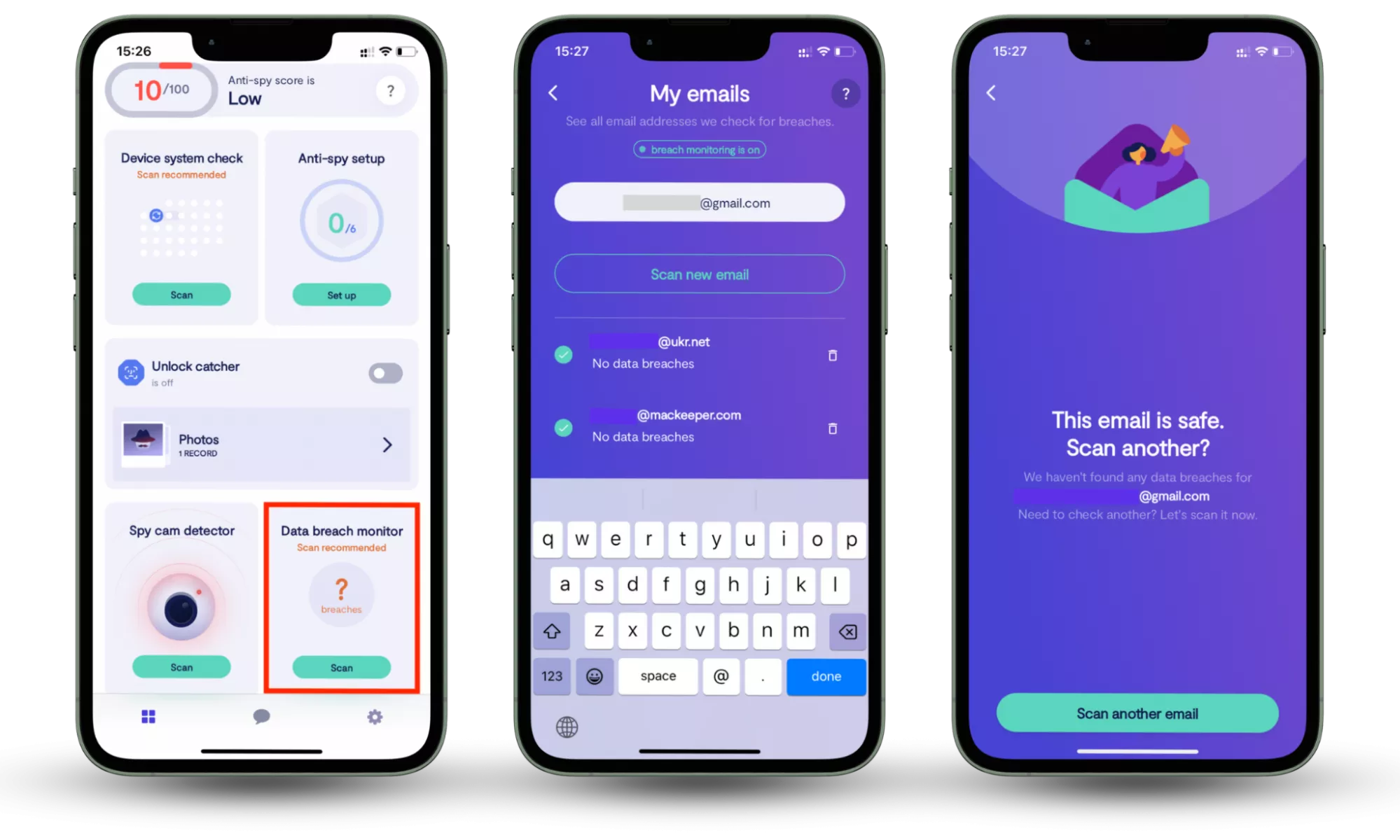
Taking these steps quickly can help contain the damage and support recovery.
Conclusion
Identity theft often starts with small, preventable mistakes—such as oversharing personal information, mishandling documents, or trusting fraudulent communication. Real-life cases show how quickly these situations can escalate. By understanding common risks and applying simple protective measures, you can significantly reduce your exposure and respond more effectively if your identity is compromised.
Ongoing awareness is just as important as prevention. Tools like Clario Anti Spy can help you stay informed by monitoring your data exposure and alerting you if your personal information appears in known breaches, giving you a chance to act before it is misused.