Table of contents
- Prevent identity theft by recognizing the signs
- Find out if you’re an easy target
- How to protect yourself from identity theft
- What to do if your identity has already been stolen
- Conclusion
Once identity thieves get a hold of your personal information, they can withdraw money from your bank account, charge your credit cards, open utility accounts under your name, and use your health insurance to get medical treatment. Worse, they may even give your name to the police when they get arrested. Learn to recognize and prevent identity theft to protect yourself.
Prevent identity theft by recognizing the signs
The most common warning signs of identity theft are charges or invoices for purchases you did not make, missing mail or an unexplained billing address change, a rejected tax return, and an unexpectedly denied loan application. Micro-charges under a few dollars often indicate a thief testing whether a stolen card is still active.
Oftentimes, people don’t realize they’ve fallen victim to identity theft until it’s too late. Learning to spot the red flags helps you address the problem before it gets worse.
- You get invoices for items you never bought. One key sign your identity has been compromised is when you receive invoices for purchases you didn’t make. You may also receive bills for credit accounts you don't own. Be mindful of small purchases you don't recognize. Identity thieves sometimes make purchases of under $5.00 to check if a credit card is still active.
- Billing address is changed or missing. Another thing to watch out for is missing mail. This could be a telltale sign someone has changed your billing address. You should also sound the alarm if you receive a rejection notice after filing your tax returns. This could mean someone has filed a fraudulent return using your identity.
- Your loan application is unexpectedly rejected. You should also look into this issue if your loan application is rejected. Unexpectedly bad credit history is a glaring red flag you simply can’t ignore.
Need more info?
Click here to check out Clario Anti Spy’s Complete guide to identity theft.
Find out if you’re an easy target
Identity thieves prioritize targets with clean credit files, large public data footprints, or limited familiarity with online security. Children, adults over 60, high-visibility social media users, and high-income earners are among the most frequently targeted groups in the United States — but weak passwords and exposed Social Security numbers put anyone at risk.
Identity thieves prefer easy and worthwhile targets. Here are some of the most commonly exposed groups:
- Children and seniors. Seeking a clean credit record, identity thieves are known to target children, and seniors too as both these demographics are typically less experienced with technology. A Cornell University study revealed that age-related changes in the brain increase the vulnerability of seniors, with one in 20 adults beyond the age of 60 falling victim to financial exploitation.
- Social media influencers. Cybercriminals also favor mega social media users because of the wealth of personal information they have readily available online.
- High-income individuals. Successful earners are vulnerable because of their rich data footprint. They use their credit cards more often, leaving behind a trail of financial and personal data in multiple locations and platforms.
Even if you don't belong to the groups mentioned above, you can still fall victim to ID theft. Just the wrong choice of password can make you an easy target. Using public Wi-Fi can also expose you. The mere act of leaving your Social Security number (SSN) during a doctor’s visit can cost you your financial well-being.
Identity theft has become such an industry that SSN are bought and sold online like commodities. Educational and medical institutions have proven to be easy pickings too. As a matter of fact, a massive tax fraud takedown in Florida traced stolen Personally Identifying Information (PII) back to schools and health care providers.
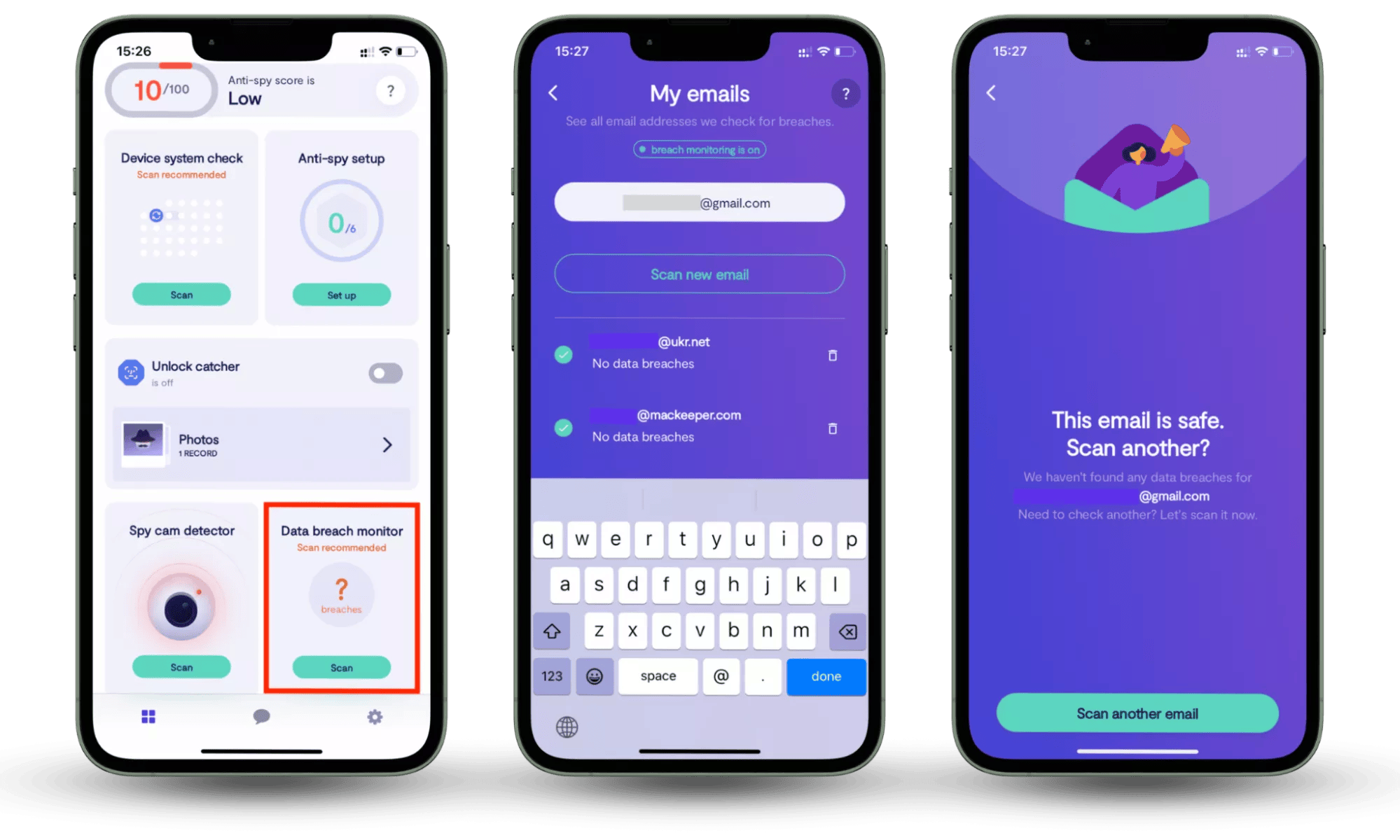
Your details often surface in a breach months before anyone uses them, which is the one window where you can still get ahead of an identity thief. Clario Anti Spy and its Data breach monitor tell you which of your accounts have been exposed and keep watching around the clock.
Here's how to check your accounts for breaches with Clario Anti Spy:
- Download Clario Anti Spy.
- Open the app, and, under Data breach monitor, tap Scan.
- Enter your email address.
- When the scan is complete, follow the on-screen guidance to review any data breaches.
- Repeat the process for any other email addresses.
Need more info?
Click here to learn about Different types of identity theft.
How to protect yourself from identity theft
You can prevent identity theft with 12 core habits split between online and offline behavior: limit social media disclosure, protect your Social Security number, avoid unknown links, freeze your credit at all three bureaus, secure your public Wi-Fi use, monitor your credit reports, use unique passwords, review statements, lock your devices, shred documents, secure your mailbox, and go paperless.
Here are 12 ways you can prevent identity theft from happening:
Steps to take online | Steps to take offline |
|---|---|
Refrain from oversharing on social media
People often don’t think twice about sharing their name, birthday, and hometown on their public social media profiles. But identity thieves are always on the lookout for such personal information. Make sure you restrict access to them. | Secure your Social Security number
Guard the master key to your personal data with all your might. Provide your SSN to receptionists and salespeople only when absolutely necessary. Avoid carrying your card with you, and secure any documents containing this info. |
Don’t click on unknown links
Scams are becoming more and more difficult to recognize. What appears to be a legitimate email may be an attempt to steal your information. So always be wary of clicking on links and attachments. And refrain from replying to emails asking for your personal information. | Freeze your credit
Prevent others from opening new credit in your name by restricting access to your records. You can do this by freezing your credit with the three major bureaus—Experian, Equifax, and TransUnion. It’s free and only takes 15 to 20 minutes to do. |
Mind your safety when using public Wi-Fis
Although convenient, public Wi-Fi can be bad for your financial health. Public networks provide tech-savvy thieves with a glimpse of your online activities, including any credit card purchases and details of how you log in to your bank account. And if you really need to use a public hotspot, use a Virtual Private Network (VPN). | Monitor your credit report
All three credit bureaus offer a free credit report every year. So take this chance to check for signs of fraud. Order a report from the three bureaus so you can cross-reference the results. It’s also best to sign up with credit protection services that send an alert every time there’s a change in your report. |
Use strong passwords
Come up with a strong and unique password for every account. Store them in a password manager, so you can easily recall them. Add authentication steps for further protection. | Review medical and financial statements
Before paying your credit card bill, check every listed merchant, location, and purchase. Make sure you recognize all of them. The “explanation of benefits” statement can alert you to health care fraud. |
Safeguard your mobile devices
Mobile devices hold a wealth of information that can potentially expose you to risks. Make a habit of locking them when not in use. Choose a passcode that’s hard to figure out. And opt for a banking app—it’s a safer option than a mobile browser for banking. | Mind that paper trail
Shred any financial document and credit card statement people can fish out of your trash. Properly store those you can’t throw away. And don’t just leave credit card, ATM, and purchase receipts out in the open. |
Guard your mailbox
Your mailbox is also a treasure trove of personal information. Don’t just leave it unguarded when you leave town. Consider installing a U.S. Postal Service-approved lockable mailbox. Signing up with USPS’ Informed Delivery service will help you track your mail. | Go paperless
Most institutions offer paperless billing. Opting in for this service is a convenient way to avoid stolen mail. Contact customer service to find out if they offer the option. Digital billing lets you easily track your bills while reducing paper waste. |
What to do if your identity has already been stolen
If your identity is already compromised, the first hours matter. In the United States, the Federal Trade Commission's recovery process is the authoritative starting point.
- Contact the fraud department of any company where the fraud occurred.
- Place a fraud alert and pull your free credit reports.
- Report the theft at IdentityTheft.gov to generate an FTC Identity Theft Report and a personal recovery plan.
- File a report with your local police department.
- Request an Identity Protection PIN from the IRS to block fraudulent tax filings.
- Create your account at ssa.gov before someone else creates one in your name.
Conclusion
Preventing identity theft comes down to shrinking how much of your data is exposed and shortening the time it takes you to notice something is wrong — freeze your credit at all three bureaus, use unique passwords, and know which of your accounts have already leaked. Clario Anti Spy's Data breach monitor scans your email addresses against known breaches and keeps watching 24/7, so you learn which accounts are exposed while you can still change the passwords instead of finding out from a collections letter.