Table of contents
- Types of identity theft
- Existing account takeover
- Synthetic identity theft
- Social Security identity theft
- Financial identity theft
- Tax identity theft
- Estate identity theft
- Medical identity theft
- Employment identity theft
- Criminal identity theft
- Senior identity theft
- Child identity theft
- How to Prevent Identity Theft
- Prevent different types of identity theft with Clario Anti Spy
Types of identity theft
There are several signs of when thieves commit identity theft—receiving bills for items you didn't buy, debt collection calls for accounts you didn't open, etc. Although there can be clues, one of the biggest problems with identity theft is that fraudsters can use your identity for years without you noticing.
Definition
Identity theft is the unauthorized use of a person's personal information to commit fraud, gain financial benefits, access services, or impersonate someone else. Identity thieves may target existing accounts, create entirely new identities using stolen information, or misuse government-issued identifiers such as Social Security Numbers. The consequences can range from unauthorized purchases and damaged credit to medical, employment, and legal complications.
According to Javelin's 2026 Identity Fraud Study, approximately 6 million people in the United States experienced account takeover fraud in 2025. With this, it's no wonder that protecting your data from identity theft matters more than ever.
Not all identity theft schemes work the same way. Some criminals take over accounts you already own, while others create new accounts using stolen information. Certain forms of identity theft target financial institutions, healthcare providers, tax authorities, or employers, making early detection and prevention strategies different for each type.
Aside from regularly checking your credit reports and financial statements for signs of unauthorized activity, you can do plenty of other things to prevent someone from stealing your identity online.
The most common forms of identity theft generally fall into the following categories:
- Financial identity fraud — stealing money, opening credit accounts, or making unauthorized purchases.
- Account takeover fraud — gaining access to existing online, banking, or service accounts.
- Government identity fraud — abusing Social Security, tax, or employment-related records.
- Medical identity fraud — obtaining healthcare services, prescriptions, or insurance benefits using someone else's identity.
- Family-targeted identity fraud — exploiting children's or seniors' personal information due to lower monitoring and detection rates.
- Criminal impersonation fraud — using another person's identity to avoid legal consequences or law enforcement scrutiny.
In this list, we've listed some of the most common types of identity theft you should watch out for, how each of them is different, and what to do when it happens:
- Existing account takeover
- Synthetic identity theft
- Social Security identity theft
- Financial identity theft
- Tax identity theft
- Estate identity theft
- Medical identity theft
- Employment identity theft
- Criminal identity theft
- Senior identity theft
- Child identity theft
Existing account takeover
Account takeover (ATO) is a type of identity theft in which a criminal gains unauthorized access to an existing account and takes control of it. Unlike synthetic identity theft, which involves creating new accounts, account takeover targets accounts that already belong to a real person. Attackers often change passwords, recovery information, or security settings to lock legitimate users out and maintain long-term access.
Unfortunately, account take-overs can be difficult to undo, especially involving financial losses. In fact, it can be challenging to prove that you are the original owner of an account and it may be a lengthy process. To regain account access, you need to contact support in each platform and make your case for identity theft.
Common warning signs of account takeover
You may be dealing with an account takeover if you notice:
- Password reset emails you didn't request.
- Login alerts from unfamiliar locations or devices.
- New recovery phone numbers or email addresses added to an account.
- Purchases, subscriptions, or transfers you don't recognize.
- Missing account notifications or security emails.
- Unexpected MFA (multi-factor authentication) prompts.
- Friends or contacts receiving suspicious messages from your accounts.
What to do if an account has been taken over
If you suspect an account takeover, take the following actions immediately:
- Change the account password if access is still available.
- Sign out of all active sessions and connected devices.
- Review account recovery methods and remove any unfamiliar email addresses or phone numbers.
- Enable multi-factor authentication (MFA) using an authentication app whenever possible.
- Review recent account activity for unauthorized changes or transactions.
The faster you act, the greater the chance of preventing additional fraud or unauthorized access.
Important to know
In some account takeover incidents, attackers intentionally avoid changing passwords immediately. Instead, they quietly add recovery methods, create email forwarding rules, or link trusted devices so they can regain access later. Even if you recover your account, it's important to review all security settings and connected devices before considering the account fully secured.
Synthetic identity theft
Synthetic identity theft is a form of fraud in which criminals combine real and fake personal information to create a new identity. Unlike account takeover, which targets existing accounts, synthetic identity theft involves building an entirely new profile using stolen data such as a Social Security Number (SSN), date of birth, or address. Because the identity does not belong entirely to one real person, this type of fraud can remain undetected for years.
In many cases, criminals do not steal a complete identity. Instead, they combine pieces of information from multiple sources. For example, a fraudster might use one person's SSN, another person's address, and a fabricated name to create a synthetic identity capable of passing basic verification checks. As the synthetic identity builds credit history or account activity over time, it can become increasingly difficult for organizations to distinguish it from a legitimate individual.
For example, fraudsters can use false and actual data or even different pieces of personal information from several individuals to create a fake identity. Aside from opening accounts, hackers can also use these fake identities to put up professional practices, dating profiles, etc.
Why synthetic identity theft is difficult to detect
Synthetic identity theft often goes unnoticed because victims may not see obvious signs of fraud. Unlike a stolen bank account or credit card, synthetic identities frequently operate independently from a victim's existing financial accounts. As a result, there may be no unauthorized transactions, login alerts, or immediate warnings that personal information has been misused.
Fraudsters may spend months or even years establishing credibility for a synthetic identity before using it to obtain loans, credit lines, mobile phone contracts, or other services. By the time fraudulent activity is discovered, significant financial damage may already have occurred.
Common warning signs of synthetic identity theft
Although synthetic identity theft can be difficult to identify, potential warning signs include:
- Receiving credit-related mail for accounts you never opened
- Discovering unfamiliar information on your credit report
- Being denied credit despite having a limited borrowing history
- Receiving collection notices for accounts you do not recognize
- Finding addresses, phone numbers, or names linked to your records that do not belong to you
- Being notified that another person is using your SSN or personal information
How to reduce the risk of synthetic identity theft
To help prevent synthetic identity fraud:
- Limit unnecessary sharing of sensitive personal information online
- Monitor your credit reports regularly for unfamiliar accounts or inquiries
- Secure important documents containing your SSN and other identifiers
- Be cautious when providing personal information to unfamiliar websites or organizations
- Use strong, unique passwords and multi-factor authentication (MFA) to protect online accounts
- Review breach notifications carefully and update credentials if your information has been exposed
Regular monitoring can help identify suspicious activity before a synthetic identity becomes established.
Important to know
Synthetic identity theft does not always affect victims immediately. In some cases, a person's SSN or other identifiers may be used only as a building block within a larger fabricated identity. Because the fraudulent account may not appear directly under the victim's name, traditional account monitoring alone may not reveal the problem. Reviewing credit reports and responding promptly to unusual notices can help detect misuse earlier.
Social Security identity theft
Social Security identity theft occurs when someone uses another person's Social Security Number (SSN) for fraudulent purposes. Criminals may use a stolen SSN to apply for credit, obtain employment, file tax returns, access government benefits, or help establish synthetic identities. Because many organizations rely on SSNs to verify identity, unauthorized use can have long-lasting financial and administrative consequences.
If fraudsters use your SSN to open an account with a false name and address, the chances of it appearing on your credit report are low. Yet, the primary victims of synthetic identity theft are creditors and retailers, who may face financial losses.
To keep impersonators away from your SSN account, never post it online or even share it with people you know.
Common ways criminals misuse stolen SSNs
A stolen Social Security Number may be used to:
- Open new credit accounts
- Apply for loans or financial products
- Obtain employment using another person's identity
- File fraudulent tax returns
- Access government benefits
- Support synthetic identity fraud schemes
- Pass identity verification checks during account registration
Because these activities can occur across different organizations, victims may not immediately realize their SSN has been compromised.
Warning signs of Social Security identity theft
Potential indicators include:
- Unexpected notices from the IRS or Social Security Administration
- Tax returns being rejected because a return was already filed
- Receiving wage or employment records from unfamiliar employers
- Unrecognized accounts appearing on credit reports
- Government benefit activity you did not initiate
- Debt collection calls related to unfamiliar accounts
- Notifications that your SSN is associated with another person's information
These signs should be investigated as quickly as possible to limit further misuse.
What to do if your SSN may be compromised
If you believe someone is using your Social Security Number fraudulently:
- Review your credit reports for unfamiliar accounts or inquiries
- Contact relevant financial institutions regarding suspicious activity
- Review Social Security earnings records for unfamiliar employment
- Monitor tax-related correspondence for signs of fraudulent filings
- Consider placing a fraud alert or security freeze on your credit files
- Document all communications and suspicious activity for future reporting
Acting early can help reduce the risk of additional accounts or services being opened using your information.
Important to know
A stolen Social Security Number does not always lead to immediate financial losses. In some cases, criminals use SSNs gradually over time to support synthetic identities, employment fraud, or future financial applications. Regularly reviewing financial records, credit reports, and official notices can help identify misuse before significant damage occurs.
Financial identity theft
One is the most common type of identity theft; financial identity theft happens when cybercriminals use your PII to access your financial information, records, and accounts. For example, hackers can use your identity to enter your bank account or use credit card numbers to withdraw money from your accounts, take out loans, or make purchases.
Unfortunately, victims of financial identity theft can be held responsible for all the purchases, unpaid bills, loans, or other transactions made under their name.
To avoid financial identity theft, check your bills, accounts, and statements regularly to protect yourself from financial losses. And, if you notice credit or debit charges you didn't make, contact your bank or credit card company immediately.
Common warning signs of financial identity theft
Financial identity theft may be occurring if you notice:
- Unauthorized transactions on bank or credit card statements.
- Unexpected account login alerts.
- New credit inquiries you did not authorize.
- Bills, cards, or financial documents for unfamiliar accounts.
- Debt collection notices related to unknown balances.
- A sudden drop in your credit score.
- Loan applications being denied despite a strong financial history.
- Missing financial statements or account notifications.
Detecting these warning signs early can significantly reduce potential losses and recovery time.
Financial identity theft prevention options
The most effective way to prevent financial identity theft is to combine multiple layers of protection. Security measures such as credit freezes, fraud alerts, multi-factor authentication (MFA), transaction alerts, and regular account monitoring help reduce the risk of unauthorized account access, fraudulent credit applications, and financial losses. Because identity thieves use a variety of methods to obtain personal information, relying on a single protection strategy may leave important gaps in your defenses.
The following protections help reduce the risk of financial fraud:
| Protection method | What it does | Best for |
| Credit freeze | Restricts access to your credit file, making it harder to open new accounts | Preventing new-account fraud |
| Fraud alert | Instructs lenders to verify identity before extending credit. | Additional verification during credit applications |
| Transaction alerts | Notifies you about account activity in real time | Detecting unauthorized spending quickly |
| Multi-Factor Authentication (MFA) | Adds an extra verification step beyond a password | Protecting online financial accounts |
| Account monitoring | Helps identify unusual account activity. | Early fraud detection |
| Password manager | Reduces password reuse and strengthens account security. | Preventing credential-based attacks |
Using multiple layers of protection is generally more effective than relying on a single security measure.
What to do if you discover financial identity theft
If you suspect your financial information has been misused:
- Contact affected banks, lenders, or card issuers immediately
- Freeze or lock compromised payment cards
- Review recent transactions and dispute unauthorized charges
- Change passwords associated with financial accounts
- Enable multi-factor authentication where available
- Review your credit reports for unfamiliar accounts or inquiries
- Continue monitoring accounts for signs of additional fraud
Keeping detailed records of suspicious activity and communications can help simplify the recovery process.
High-risk situations that increase financial identity theft exposure
Certain situations can increase the likelihood of financial identity theft, including:
- Reusing passwords across multiple accounts
- Responding to phishing emails or text messages
- Using unsecured public Wi-Fi networks for financial transactions
- Ignoring data breach notifications
- Sharing sensitive financial information through unverified websites
- Storing financial documents in easily accessible locations
Understanding these risk factors can help reduce opportunities for fraudsters to obtain sensitive information.
Tax identity theft
Tax identity theft occurs when someone uses another person's personal information, such as a Social Security Number (SSN), to file a fraudulent tax return, claim a refund, or obtain tax-related benefits. Victims often discover the fraud only after attempting to file their own return or receiving unexpected notices from tax authorities. Because tax records contain sensitive personal and financial information, tax identity theft can be difficult to resolve and may require ongoing monitoring.
A clear warning sign that your identity has been stolen is if someone else has already filed a tax return under your name or when the IRS rejects your tax return. So, if you don't want to fall victim to this scheme, remember the IRS never initiates contact with taxpayers to request financial information through social media or call. Besides, the IRS always notifies you of any suspicious return bearing your name and SSN by sending you an official email.
Common warning signs of tax identity theft
Tax identity theft may be occurring if you:
- Learn that a tax return has already been filed using your SSN
- Receive notices regarding income from an employer you do not recognize
- Receive tax transcripts, refund notices, or tax documents you did not request
- Discover tax-related activity associated with unfamiliar accounts
- Receive communications regarding benefits, credits, or filings you did not initiate
- Notice discrepancies in your tax records or filing history
Because tax fraud can remain hidden until filing season, it is important to review official correspondence carefully and investigate unexpected notices.
Important
Tax authorities generally use official notices and verified communication channels when contacting taxpayers about account issues, identity verification, or filing concerns. Taxpayers should independently verify unexpected requests for personal or financial information and avoid sharing sensitive data through unsolicited emails, text messages, social media messages, or phone calls.
How to reduce the risk of tax identity theft
To help protect your tax information:
- Keep your Social Security Number private and share it only when necessary
- Use strong, unique passwords for tax preparation and financial accounts
- Enable multi-factor authentication (MFA) whenever available
- Store tax documents securely and dispose of sensitive paperwork safely
- Be cautious of phishing emails, text messages, and phone calls requesting personal information
- Monitor financial and tax-related accounts for unusual activity
- Respond promptly to notices involving identity verification or tax account changes
Preventive measures can significantly reduce opportunities for criminals to misuse tax-related information.
What to do if you suspect tax identity theft
If you believe someone has used your identity for tax fraud:
- Review any notices or correspondence carefully
- Document suspicious activity and keep copies of relevant communications
- Verify account activity through official tax authority channels
- Monitor your credit reports and financial accounts for additional signs of identity theft
- Continue monitoring future tax filings and correspondence for unusual activity
Because tax identity theft is often linked to broader identity theft schemes, additional monitoring may be necessary even after the initial issue is addressed.
Estate identity theft
Estate identity theft occurs when criminals misuse the personal information of a deceased person for financial gain or other fraudulent purposes. Fraudsters may use stolen identities to access accounts, claim benefits, open new lines of credit, or redirect assets intended for beneficiaries. Because account closures and record updates often take time after a person's death, deceased individuals can become attractive targets for identity thieves.
While no one plans untimely death, thieves often prey on people who experience them. When a deceased person doesn't make the proper preparations, hackers can target their accounts, withdraw their money, get their benefits, and more.
To help prevent estate identity theft, you should create a last and will testament that specifies how your loved ones should handle your finances after you pass, even as a young person. In addition, you should notify credit bureaus and financial institutions immediately after a relative's death.
Common warning signs of estate identity theft
Potential indicators include:
- New credit accounts appearing after a person's death
- Unexpected financial statements or collection notices
- Unrecognized withdrawals or account activity
- Missing estate funds or benefit payments
- Notifications regarding loans, credit cards, or services that were never requested
- Tax documents associated with unfamiliar financial activity
- Changes to account contact information without authorization
Any unexpected activity involving a deceased person's records should be investigated promptly.
Commonly targeted information in estate identity theft
Fraudsters may attempt to misuse:
- Social Security Numbers
- Financial account details
- Insurance information
- Government benefit records
- Tax information
- Personal identification documents
- Contact and address information
Even limited personal information can sometimes be enough to support fraudulent applications or account access attempts.
Medical identity theft
Medical identity theft occurs when someone uses another person's health insurance information, medical records, or personal details to obtain healthcare services, prescriptions, medical equipment, or insurance benefits. In addition to financial losses, medical identity theft can create inaccurate medical records, disrupt insurance coverage, and potentially affect future healthcare decisions.
While other forms of identity theft can be a source of inconvenience, medical identity can be potentially life-threatening. Scammers can charge your insurance for medical services or prescriptions you didn't receive through medical identity theft. With this, insurance companies can deny your life-saving treatments if the bills exceed the limits of your medical coverage.
According to the U.S. healthcare breach data analyzed by HIPAA Journal, more than 289 million individuals were affected by large healthcare data breaches in 2024, highlighting the scale of sensitive medical information exposed to cybercriminals. Medical identity theft can put your health at risk when it turns out someone else's diagnosis is in your medical file. Medical identity theft could also potentially impact your insurance price premiums, and the treatments recommended to you by your physicians.
To be safe, always check your medical records with your doctor to ensure their accuracy. In addition, if you start receiving unexpected medical bills, be sure to raise a dispute as soon as possible.
Common warning signs of medical identity theft
Potential indicators include:
- Medical bills for services you never received
- Insurance claims you do not recognize
- Unexpected Explanation of Benefits (EOB) statements
- Notifications that your insurance benefits have been exhausted
- Prescriptions appearing in your records that were never issued to you
- Medical appointments or treatments you did not schedule
- Collection notices related to unfamiliar healthcare services
- Incorrect diagnoses or treatments appearing in your medical records
- Any unexplained healthcare activity should be reviewed as soon as possible
How to reduce the risk of medical identity theft
To help protect your medical information:
- Review insurance statements and Explanation of Benefits (EOB) documents regularly.
- Monitor healthcare accounts for unfamiliar activity.
- Secure documents containing insurance or medical information.
- Be cautious when sharing personal health information online.
- Verify requests for medical or insurance information before responding.
- Review medical records periodically for inaccuracies.
- Report suspicious healthcare-related activity promptly.
Early detection can help limit both financial and healthcare-related consequences.
What to do if you suspect medical identity theft
If you believe your medical information has been misused:
- Request copies of relevant medical and insurance records
- Review records for unfamiliar diagnoses, treatments, or prescriptions
- Contact healthcare providers regarding inaccurate information
- Review insurance claims and billing statements
- Document suspicious activity and keep copies of correspondence
- Continue monitoring records for additional unauthorized activity
Resolving medical identity theft may require correcting records across multiple healthcare providers and insurers.
Why medical information is valuable to identity thieves
Medical records often contain a combination of personal identifiers, insurance details, contact information, and healthcare history. This information can be useful not only for insurance fraud but also for broader identity theft schemes that rely on verified personal data. As a result, healthcare-related data breaches can create risks that extend beyond medical services alone.
Employment identity theft
Employment identity theft occurs when someone uses another person's personal information to obtain a job, pass employment verification checks, or gain access to employment-related benefits. Criminals may use stolen identifiers such as a Social Security Number (SSN) or other personal details to secure work under a false identity, potentially creating tax, wage, and employment record complications for the victim.
Aside from your Social Security Number (SSN), scammers can also use other types of PII to apple for a role or pass a background check. Afterward, these fraudsters can use this information to collect income, including taxes the IRS will demand from you.
To discover employment identity theft before the IRS sends you a tax bill, use the e-Verify website and review all the employers that have checked your records. And, if there are any unfamiliar ones, be sure to contact the Federal Trade Commission to get advice or a personal recovery plan.
Common warning signs of employment identity theft
Potential indicators include:
- Tax documents from employers you never worked for
- Wage information that does not match your employment history
- Government notices regarding unfamiliar employment records
- Unexpected tax liabilities or discrepancies
- Employment-related benefits associated with unknown employers
- Background check results containing inaccurate employment information
- Notifications indicating your personal information was used during employment verification
Because employment identity theft often develops quietly, victims may not receive obvious warnings until tax season or during a background screening process.
How to reduce the risk of employment identity theft
To help protect yourself from employment-related fraud:
- Limit unnecessary sharing of sensitive personal information
- Monitor tax records and wage-related documents carefully
- Protect documents containing your Social Security Number
- Be cautious when responding to employment-related requests for personal information
- Review notifications involving identity verification or employment records
- Monitor for signs of broader identity theft that could affect employment information
Protecting personal identifiers can reduce opportunities for criminals to misuse your identity during hiring and verification processes.
Criminal identity theft
Criminal identity theft occurs when someone uses another person's identity during interactions with law enforcement, the court system, or other legal processes. Instead of using their own name, criminals may provide stolen personal information to avoid penalties, conceal their identity, or shift legal consequences onto an innocent person. This type of identity theft can lead to inaccurate records, legal complications, and significant challenges for victims attempting to clear their names.
No one wants to end up in jail, and cybercriminals aren't an exception. For this reason, criminals will use various means of avoiding justice, including stealing someone's identity and framing this poor person. Afterward, clearing your name gets more problematic when the evidence points to your identity.
The worst part of this type of identity theft is that you won't be able to detect it until there are consequences—from an unpaid speeding ticket, turning down a job, or even an arrest. If this happens to you, the only thing you can do is contact law enforcement immediately.
Warning signs of criminal identity theft
Potential indicators include:
- Receiving notices for violations you did not commit.
- Unexpected warrants, citations, or court communications.
- Background check results containing unfamiliar offenses.
- Being denied employment due to criminal history records.
- Collection notices related to fines or penalties.
- Requests to appear in court for unfamiliar matters.
- Law enforcement inquiries regarding incidents you do not recognize.
Because legal records can affect multiple areas of life, any unexplained criminal history should be investigated promptly.
What to do if you suspect criminal identity theft
If you believe criminal activity has been linked to your identity:
- Document any notices, citations, or legal communications you receive
- Review background check results and public records for inaccuracies
- Keep records of any suspicious incidents or communications
- Verify information associated with your identity whenever possible
- Continue monitoring for additional legal or administrative issues that may arise
Prompt action can help prevent inaccurate information from spreading to additional systems or organizations.
Senior identity theft
Seniors are less likely to monitor their accounts regularly and tend to be more trusting, making them ideal victims for identity thieves. Seniors may have social benefits, financial savings, and limited technical knowledge. So, we recommend seniors place a security freeze on their credit reports or even lock them if they aren't in use.
But most importantly, younger family members should try to educate the older generation about cybersecurity. Thankfully, Clario's blog is the perfect source for that.
Common scams linked to senior identity theft
Older adults are frequently targeted through:
- Tech support scams claiming a device has been infected
- Government impersonation scams
- Medicare or healthcare benefit scams
- Romance scams involving online relationships
- Grandparent scams involving fake emergencies
- Investment and retirement account scams
- Charity scams following natural disasters or major events
- Phishing emails and text messages requesting personal information
Many of these scams are designed to pressure victims into sharing sensitive information before they have time to verify the request.
How seniors can reduce the risk of identity theft
To help protect personal information and financial accounts:
- Review financial and healthcare statements regularly
- Enable transaction alerts whenever available
- Use strong, unique passwords for online accounts
- Enable multi-factor authentication (MFA) on important accounts
- Be cautious of unsolicited calls, emails, and messages
- Verify requests for personal information independently
- Monitor credit reports for unfamiliar activity
- Consider a credit freeze when credit applications are not anticipated
Combining account monitoring with healthy skepticism toward unexpected requests can significantly reduce exposure to identity theft schemes.
Family members and trusted contacts can help seniors identify potential fraud by:
- Discussing common scams regularly
- Helping review financial statements and account activity
- Encouraging prompt reporting of suspicious communications
- Assisting with device and account security settings
- Verifying unexpected requests for money or personal information
Open communication can help reduce the likelihood that fraudulent activity goes unnoticed.
Important to know
Senior identity theft is not always the result of a single incident. Criminals may spend weeks or months building trust before requesting money, account access, or sensitive information. This gradual approach can make fraud more difficult to recognize, particularly when the scammer appears helpful, trustworthy, or emotionally supportive.
Child identity theft
Sadly, children are also at risk of identity theft. Cybercriminals can steal information from school databases, store accounts, or even access it from social media. Besides, most children under 16 have blank credit reports, which means fraudsters can open credit accounts under their names undetected.
Unfortunately, it may take years to uncover a crime until a victim applies for a job or student loan. To determine if your child's information is being misused, check for a credit report with three nationwide credit bureaus (Equifax, Experian, and TransUnion).
If you spot something suspicious, go to IdentityTheft.gov to report and recover from identity theft. As much as possible, it is also good to remind children not to overshare personal information online.
Common sources of children's personal information
Identity thieves may obtain children's information through:
- School or education-related data breaches
- Compromised online learning platforms
- Gaming accounts and gaming communities
- Social media profiles and public posts
- Family data breaches affecting household information
- Stolen physical documents
- Phishing scams targeting parents or guardians
- Unauthorized access to cloud storage or shared devices
Even seemingly harmless personal details can be combined with other information to support identity theft.
How parents can reduce the risk of child identity theft
Parents and guardians can help protect children's information by:
- Limiting the amount of personal information shared publicly online
- Monitoring school and service-provider breach notifications
- Reviewing privacy settings on social media platforms
- Teaching children not to share personal details with strangers online
- Securing important documents containing personal identifiers
- Monitoring accounts associated with educational, gaming, and online services
- Reviewing available records if suspicious activity is suspected
Preventive habits established early can significantly reduce future identity theft risks.
How to Prevent Identity Theft
Preventing identity theft requires a combination of account security, credit monitoring, fraud detection, and safe online habits. The most effective protections include using strong passwords, enabling multi-factor authentication (MFA), monitoring financial and credit activity, securing personal information, and responding quickly to data breaches. Because identity thieves use multiple methods to obtain personal data, layered protection is generally more effective than relying on a single security measure.
When it comes to identity theft, one of the biggest threats is the time it takes to identify it. Identity theft often begins long before criminals attempt to use stolen information. Personal data may be exposed through data breaches, phishing attacks, malware infections, stolen devices, social engineering scams, or oversharing online. Once thieves steal your data, they can use it in various fraudulent activities, so taking proactive steps to secure sensitive information can significantly reduce the likelihood of becoming a victim.
To reduce your risk of identity theft:
- Use strong, unique passwords for every important account
- Enable multi-factor authentication (MFA) whenever available
- Monitor financial statements and transaction activity regularly
- Review credit reports for unfamiliar accounts or inquiries
- Secure devices with operating system and app updates
- Be cautious of phishing emails, texts, and phone calls
- Limit unnecessary sharing of personal information online
- Protect important documents containing sensitive identifiers
- Respond quickly to breach notifications involving your information
- Monitor accounts associated with healthcare, taxes, employment, and government benefits
While it can be terrifying to suspect identity theft, there are things you can do to prevent identity theft. However, the most convenient way to protect yourself from having your identity stolen by hackers is by investing in software like Clario Anti Spy.
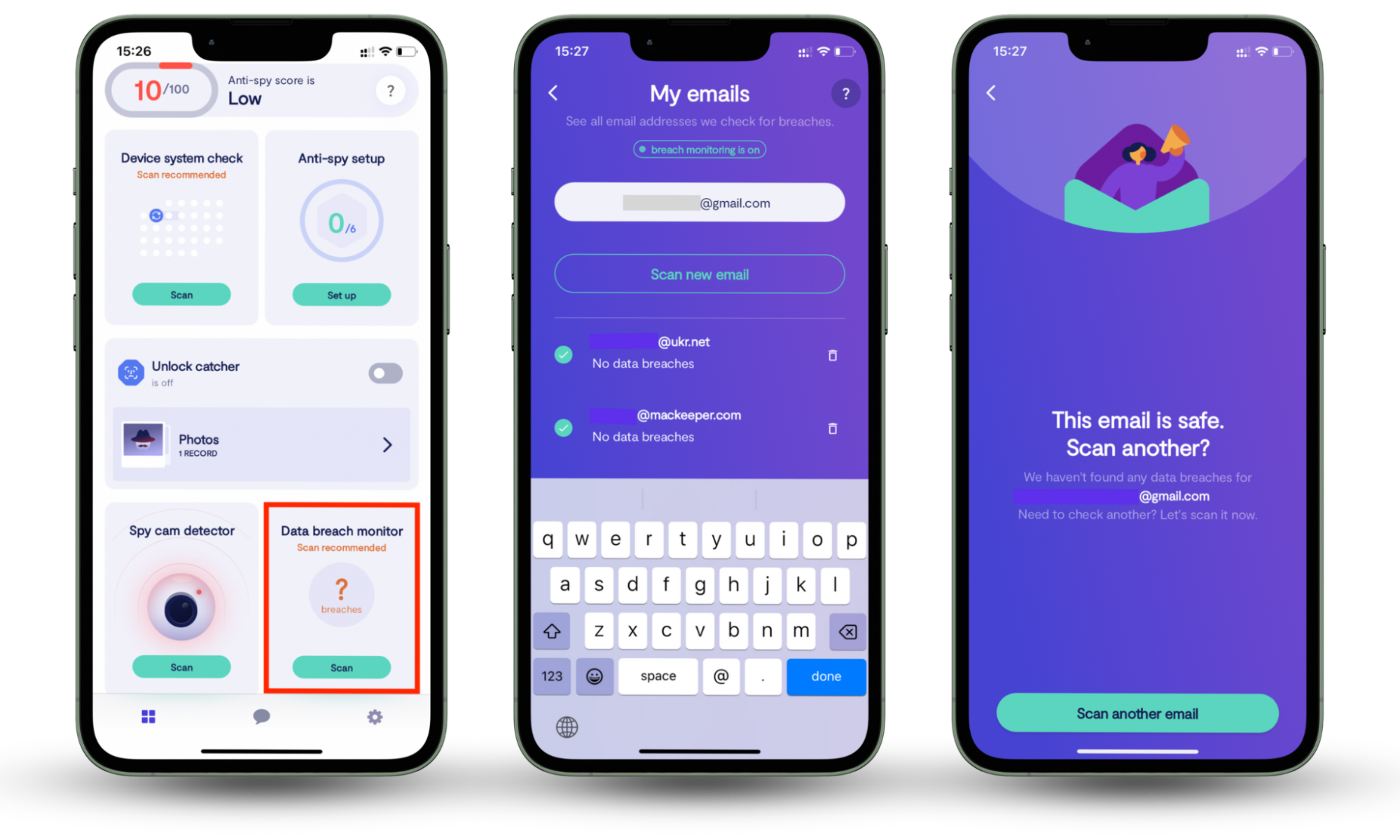
Even in your sleep, you can use Clario Anti Spy's 24/7 Data breach monitor to track multiple email addresses for possible identity theft.
Here's how to use Clario Anti Spy's 24/7 Data breach monitor:
- Download Clario Anti Spy, get a subscription, and set up an account.
- Once you’re in the app, click Scan under the Data breach monitor option.
- Now select Check for breaches at the bottom of the section. Clario Anti Spy will let you know if your email address was included in a breach. If so, follow its instructions to secure it.
- Click on Scan another email to repeat the process for another email address you want to monitor.
Prevent different types of identity theft with Clario Anti Spy
The thought of your identity being stolen is scary, but it’s a very real possibility. For this reason, responding as quickly as possible to a breach is imperative to prevent identity theft and other consequences, like financial losses.
Clario Anti Spy understands this, which is why its Data breach monitor checks for data leaks containing your email in real time, so you can secure it and all accounts linked to it urgently. Use Clario Anti Spy’s Data breach monitor to stay on top of breaches affecting you and prevent identity theft.