Table of contents
- What Is a Discord virus?
- What are the main types of Discord malware?
- Corruption of the installation file
- Remote access Trojans
- NitroHack
- MosaicLoader
- How can you get a Discord virus?
- How to protect yourself on Discord?
- How to remove a Discord virus
- Now you know to stay safe from Discord viruses
What Is a Discord virus?
Broadly speaking, a Discord virus refers to malicious payloads such as remote access trojans, spyware, and token stealers distributed through the platform. Attackers typically use direct messages, compromised servers, or Discord's Content Delivery Network (CDN) to trick users into downloading infected files, allowing them to hijack accounts and steal personal data.
If cybercriminals successfully distribute malware on your device, these individuals might be able to log your keystrokes. Once they’ve got this information, they can send these details on to people capable of a lot more damage.
With details on your keystrokes, criminals can work out your bank login details, how to get into your eCommerce accounts, and much more.
Common signs of a Discord infection include:
- Automated messages or links sent from your account without your knowledge.
- Unknown authorized apps appearing in your User Settings.
- Sudden, unprompted changes to your password or registered email address.
What are the main types of Discord malware?
Discord malware typically falls into three main categories: modified client files that execute malicious code upon launch, remote access trojans (RATs) hosted persistently on the platform's servers, and specialized token stealers designed to bypass standard authentication. These threats continually evolve, often disguising themselves as legitimate software or promotional offers. Here is a quick breakdown of the most common threats and how to identify them:
| Discord malware type | How it works | How it spreads | How to spot it |
| Corruption of the installation file | Tampered app files: Malicious code inserted directly into Discord's core system files. | Downloading unofficial "custom clients," modified visual themes, or unverified third-party add-ons. | Standard antivirus often misses it. You must manually check your Discord index.js file for modified, unauthorized code. |
| Remote access Trojans (RATs) | Hidden virus programs: Harmful software downloaded and run in the background of your computer. | Clicking phishing links or downloading fake "beta games" and "leaked software" sent via direct messages. | Unexplained computer activity, unauthorized access to your device's files, or apps opening without your permission. |
| NitroHack | Login stealers: Scripts designed to secretly grab your Discord authentication token and browser data. | Clicking a fake "Free Discord Nitro" link received via a direct message from a compromised friend's account. | Your account automatically sends spam DMs to your friends promoting the same fake Nitro link; stolen browser details. |
| MosaicLoader | Virus bundles: A single fake file that secretly drops multiple different viruses onto your system at once. | Downloading files that mimic legitimate software, often through malicious links hosted on the CDN. | Sudden, severe system slowdowns (as it drops multiple malware strains at once) and hijacked web accounts (like Facebook). |
Corruption of the installation file
One common Discord hack occurs when criminals insert malicious code into Discord’s client files. Then, once a person downloads and runs them, they also unintentionally run the dangerous code.
Removing the existing Discord files and reinstalling those offered by a legitimate source takes care of this type of malware. The tricky thing is that malware scanners often don’t detect this problem.
Remote access Trojans
Cybercriminals often distribute remote access Trojans through phishing links. Discord hackers specifically create accounts to spread malware. After generating a Discord-specific URL to spread the malware, they delete their accounts.
The Discord content distribution network (CDN) still hosts the content after a person no longer uses Discord. Even worse, a person could click on the link and get exposed to the malware without using Discord. One investigation across several months found 17,000 unique URLs in the Discord CDN connected to malware.
NitroHack
NitroHack is a type of malware that lures people in by promising them complimentary access to the premium Discord tier. Instead, it steals Discord users’ tokens and their stored browser details, including credit card numbers.
NitroHack turns the Discord Windows client into a Trojan virus. It then tries to trick people the original Discord user knows by repeating the scam for free premium access.
MosaicLoader
MosaicLoader is a relatively new malware threat that often wreaks havoc by mimicking file information similarly to legitimate software. Additionally, the payload mechanism frequently infects the targeted system with several malware strains simultaneously.
Researchers that initially studied MosaicLoader confirmed its connections to legitimate Discord link URLs, and warned that it uses cookie stealers. Those could exfiltrate login data from sites such as Facebook, enabling account takeovers by malicious parties.
How can you get a Discord virus?
Users typically get Discord viruses by simply using the service or clicking on an infected link, executing malicious files disguised as game alphas, clicking on spoofed Nitro gift links, scanning fraudulent server verification QR codes, or downloading infected payloads. Because Discord’s CDN hosts files persistently, malicious links can remain active and dangerous even if the sender's account has been banned. Cybercriminals typically orchestrate their Discord hack methods to spread malware undetected.
Important to know
Simply receiving a malicious link on Discord will not infect your device; infection almost always requires you to actively click the link, authorize an app, or download and run a file.
How to protect yourself on Discord?
Protecting your Discord account requires a layered approach: enabling Two-Factor Authentication (2FA), restricting direct messages from unknown users, auditing authorized third-party apps, and using dedicated cybersecurity tools. People can also protect themselves by screening for potential phishing attacks. Relying solely on a desktop antivirus is often insufficient against social engineering tactics designed to steal your session token. Paying close attention to the sender’s email address is a useful way to spot fake messages.
It’s also worth using smart internet security practices on Discord, and doing likewise anywhere else online for that matter, to minimize your risk of getting viruses.
Essential Discord Privacy Settings to enable immediately:
- Go to User Settings in Discord > Privacy & Safety.
- Set Safe Direct Messaging to Keep me safe to automatically scan and block explicit or dangerous media.
- Turn off Allow direct messages from server members for large, public servers.
- Periodically review User Settings > Authorized Apps and deauthorize any unfamiliar applications or bots.
Unlike on desktops, getting Discord hacked by a virus on mobile devices isn't something you need to worry about. However, phishing attacks could still pose a risk. That's where an anti-spyware solution like Clario Anti Spy helps. Its Data breach monitor alerts you if your emails and passwords appear in a data breach so that you can take immediate action to secure your accounts.
Here's how to check for data breaches with Clario Anti Spy:
- Download Clario Anti Spy and subscribe to create an account.
- Tap Scan under Data breach monitor.
- Tap Check for Beaches to scan your email addresses. This is also enables alerts, so you'll be notified of future breaches.
- If your email address is found in a data breach, update the passwords on your Discord and other sensitive accounts immediately.
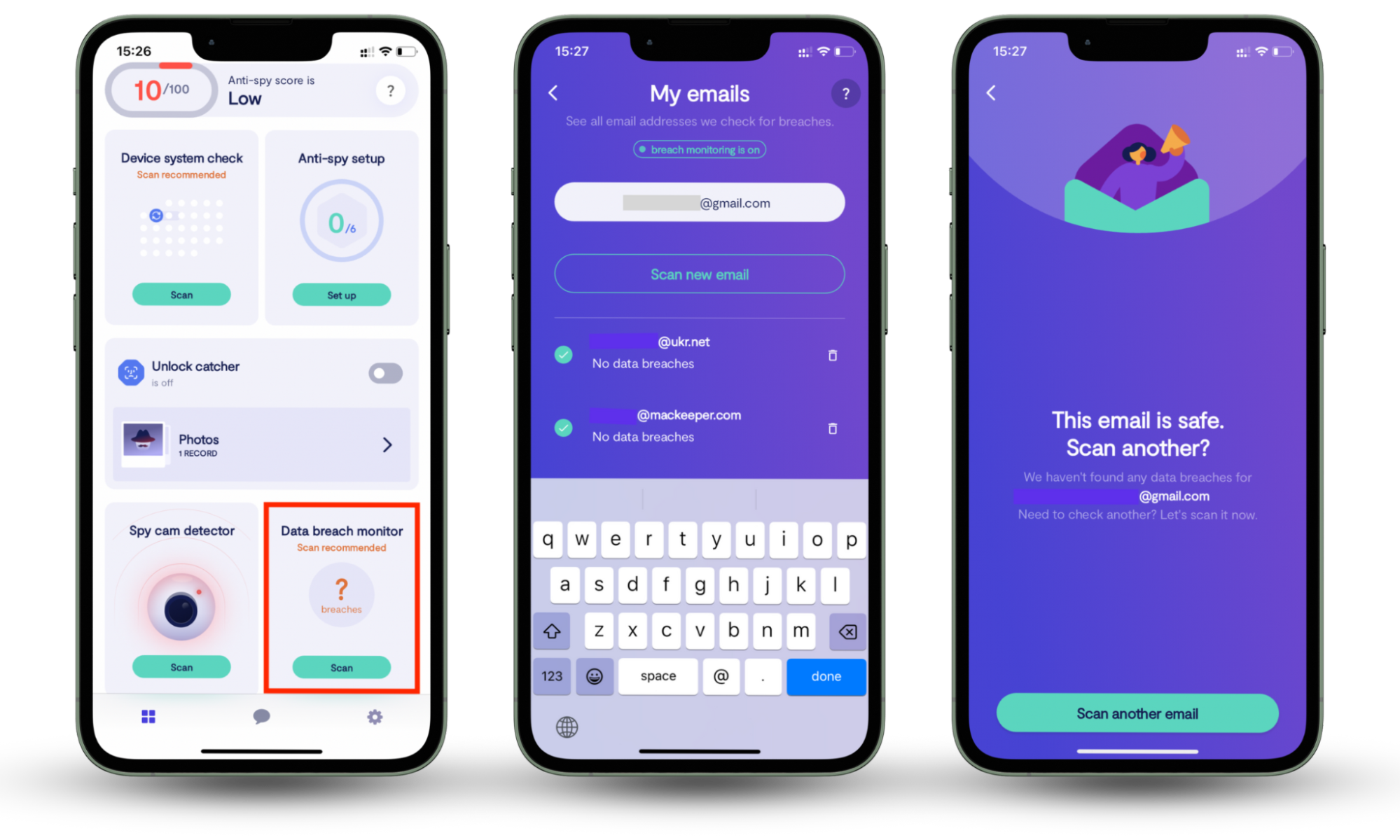
Clario Anti Spy also includes an Anti-spy setup to help you improve your phone's privacy and security. This helps a lot when it comes to dealing with malicious threats such as phishing attacks. Just tap the Setup button under Anti-spy setup to get started.
Security note
Technical defenses cannot prevent social engineering. You must remain skeptical of urgent requests, random files, or too-good-to-be-true offers, even if they appear to come from a trusted friend.
How to remove a Discord virus
A dangerous characteristic of many Discord viruses is that they don’t cause any immediately obvious effects that could alert you to a problem. However, if you suspect something’s wrong, one option is to check the client code.
How to check the client code and remove a Discord virus on Windows:
- Find the %AppData%\\Discord\0.0.306\modules\discord_voice\index.js file and open it.
- Launch NotePad.
- Scroll down to the end of the code. If unmodified, it should end with module.exports = VoiceEngine;. If you see a different ending and have not changed the code yourself, you’re likely dealing with Discord malware.
- If necessary, you can remove the offending code manually. However, deleting and reinstalling the Discord client has the same effect.
If you’re using a Mac, the steps to manually remove a Discord virus are a little different.
Expert note
The folder numbered 0.0.306 changes with every Discord update. Always look for the folder with the highest version number in your discord_voice directory.
How to remove a virus on Mac:
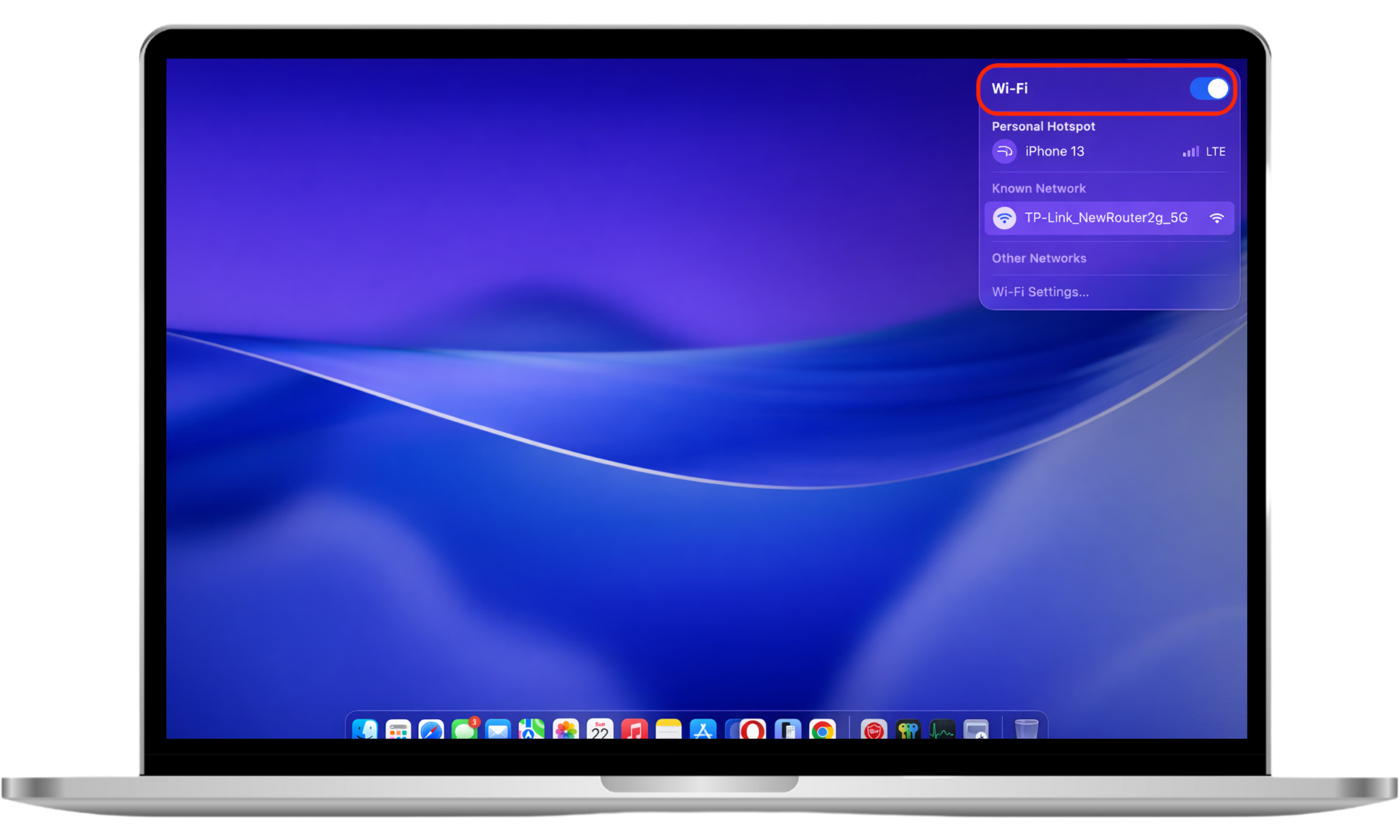
- Turn off your Wi-Fi and shut down your Mac.
- Turn on your Mac again and activate safe mode by holding the Shift button until the login window appears. On Apple Silicon Macs, press and hold the Power button and select your macOS volume first.
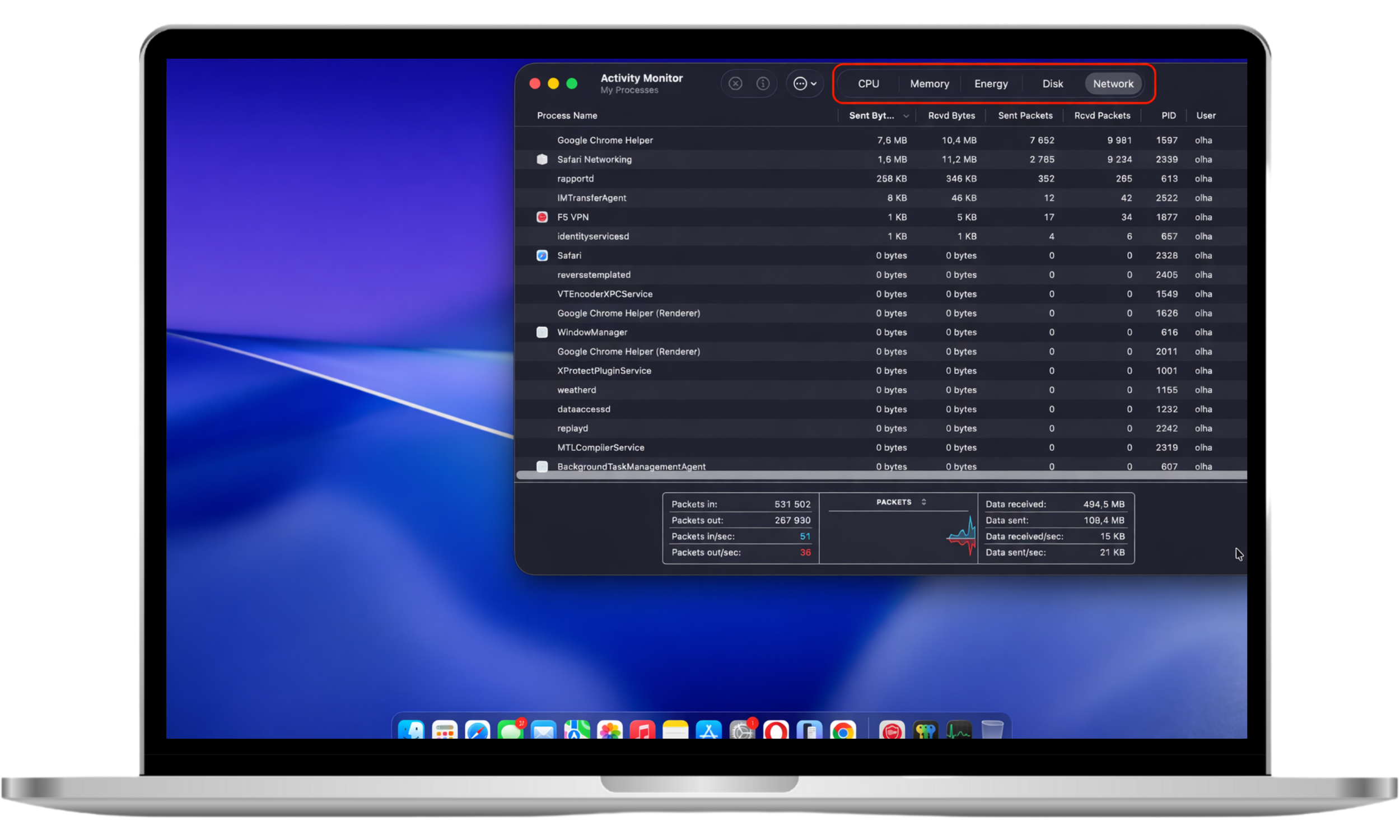
- Go to Activity Monitor.
- Look for suspicious apps under Process Name, % CPU, etc.
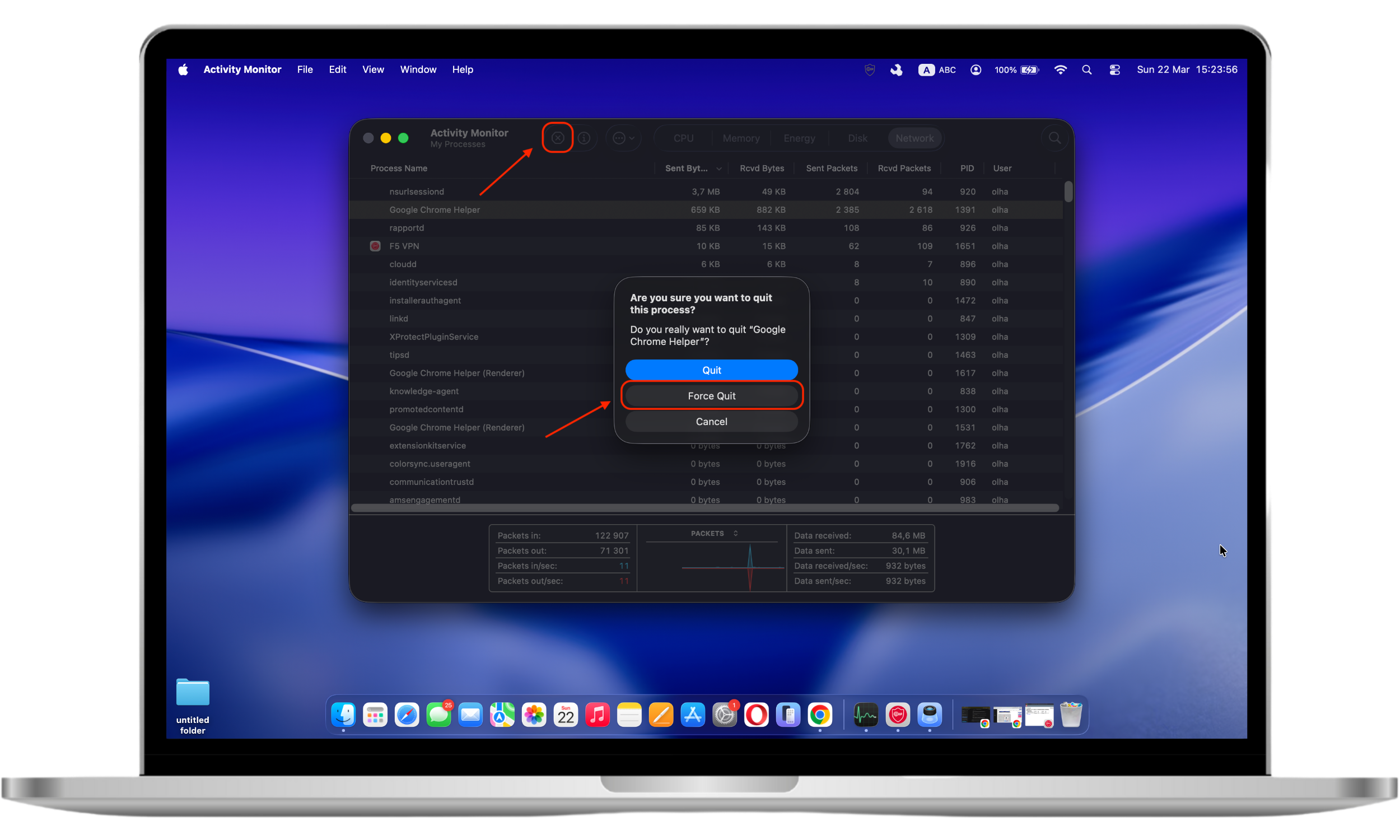
- If you find anything that doesn’t look right, click on the x button in the top and select Force Quit.
Important to know
If the malware has successfully exfiltrated your browser cookies, removing the virus from your Discord client does not secure your other web accounts. You must run a full system anti-malware scan and reset passwords for your email and banking accounts.
Now you know to stay safe from Discord viruses
Discord is like any other online service in that it’s not completely risk-free. Even before these malware issues came to light, the platform had problems with user harassment, for example.
Protecting yourself online begins with taking straightforward actions like setting strong passwords and learning to spot phishing signs. Besides doing those things, consider periodically checking for updates about this malware and associated methods to stay safe.
On mobile devices, install Clario Anti Spy and turn on its Data breach monitor to receive timely alerts in case your Discord or your online accounts get hacked.
Read More: