Table of contents
- Why fake news spreads so easily online
- Common sources of fake news in 2025–2026 and why they work
- Fake news information viruses: How do they work?
- How to spot Fake News stories?
- How to filter content?
- Conclusion
Why fake news spreads so easily online
Fake news spreads easily because it is designed to trigger emotion, travel through trusted social networks, and gain visibility through engagement-driven algorithms. When the same claim appears across multiple platforms and from familiar contacts, it creates the illusion of credibility. Understanding these mechanics helps explain why misinformation feels convincing even to careful readers.
Unlike coronavirus, fake news and conspiracy theories never arise out of nowhere. And there’s little we can do but to agree.
Quite recently, the word ‘infodemic’ entered our lexicon. This is the way Tedros Ghebreyesusm, the head of WHO, characterized the wave of fake news spreading around Covid-19.
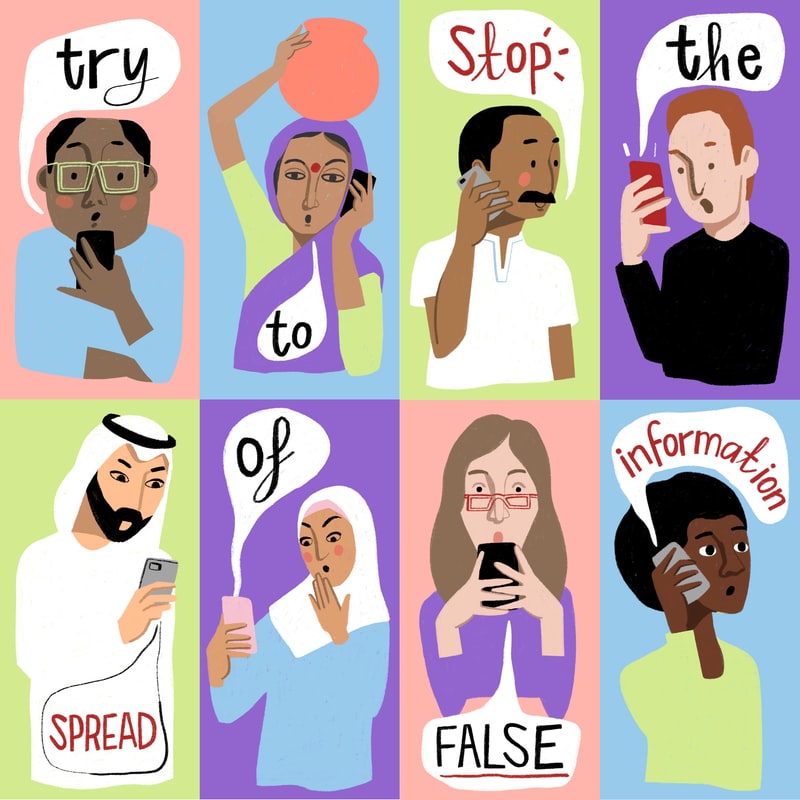
In today’s accelerating world, it’s easy to make something go viral: a careless like, a friendly share, a repost in a popular public, a like again – and boom, the fake has millions of views!
The truth is, exciting news is much easier to believe, especially if it is backed up by "recent research of British scientists", video proofs and photos. Even the sanest person in the world can fall into this trap if they receive some information from several sources at once.
Imagine, you get a message from a relative on WhatsApp, then from a colleague on Viber, and then you see a post on Facebook – and accidentally, you find yourself watching a video or reading an article covering the topic in full detail. And maybe, you even believe everything written there, but just for a moment or two.
When the same claim appears across different platforms and from different people, your brain may interpret repetition as validation. This creates a layered credibility effect:
- Source familiarity. The message comes from someone you know (family, friend, colleague).
- Platform multiplication. You encounter the same claim on multiple apps (messengers, social networks, video platforms).
- Format variation. The claim appears in different formats (text message, post, article, video), which makes it feel independently confirmed.
- Perceived consensus. Repetition creates the impression that “many people are talking about this,” even if the original source is the same.
Note
Repetition increases perceived truthfulness, even when no new evidence is presented. Seeing something multiple times does not make it more accurate—it only makes it more familiar.
Common sources of fake news in 2025–2026 and why they work
Fake news in 2025–2026 often originates from sources designed to look credible or emotionally urgent. These include AI-generated content, manipulated screenshots, anonymous social posts, and monetized clickbait websites. Understanding where misinformation typically starts and what makes each source persuasive makes it easier to identify and question suspicious claims.
AI-Generated Videos and Voice Clones
Deepfake interviews and synthetic voice recordings impersonate public figures.
- Why it works: Seeing or hearing someone “say” something creates strong perceived authenticity, even when the content is fabricated.
Manipulated Screenshots and Fake Headlines
Edited social media posts or altered news site screenshots circulate as proof.
- Why it works: Screenshots feel permanent and “documented,” even though they can be easily fabricated.
Anonymous Viral Posts
Claims starting with “A friend who works in…” or “Insider leak says…”
- Why it works: Personal proximity increases trust, even when the original source cannot be verified.
Monetized Clickbait Websites
Sites that mimic legitimate media but exist primarily for ad revenue.
- Why it works: Sensational headlines drive clicks and emotional reactions, which platforms amplify.
Reposted Old Content With New Context
Years-old photos or videos shared as if they show current events.
- Why it works: Real visuals create credibility, even when the timeline is false.
Fake news information viruses: How do they work?
Fake news spreads like a social “information virus”: it is designed to trigger strong emotions, earn rapid engagement, and travel quickly through shares and reposts. Platforms often amplify this content because algorithms reward attention signals (likes, comments, watch time). As it jumps between networks and formats, details can mutate, making the story feel more widespread and believable than it is.
Our internet culture is built on the economy of likes, comments and shares. For this reason, shocking and polemical content is used to entice and enrage in equal measure. And sometimes, even authoritative bloggers and high-quality media blur boundaries between what is acceptable and what is not – all for the sake of a larger audience and their engagement through clicks and comments.
How fake news typically spreads:
- A headline is written to provoke emotion (fear, anger, outrage, excitement).
- “Authority signals” are added (unnamed experts, vague studies, edited clips).
- The post gains engagement early and is boosted by recommendation systems.
- People share it inside trusted circles (family chats, coworkers, community groups).
- Reposts appear across platforms, often without the original context.
- Corrections arrive later and rarely travel as far as the initial claim.
Once created and professionally distributed, fake, thumb-stopping content transforms, grows, and heads to other platforms, and as a result, settles in people's heads. Influential media platforms like Facebook, YouTube, and Twitter fail to remove and moderate such content.
Note
Most large platforms rank and recommend content based on engagement signals (for example: clicks, comments, reshares, watch time). That means a misleading post can receive extra visibility before moderators review it, especially when it is rapidly reposted, clipped, or reuploaded in slightly different forms.
Some of the recent examples completely prove this.
- In late 2025, researchers identified more than 150 YouTube channels spreading fake and inflammatory political videos that collectively amassed over 1.2 billion views globally before major removal action was taken. Many channels continued posting similar content that wasn’t automatically deplatformed until external reporting occurred, highlighting gaps in automated moderation.
- In early 2025, Meta announced changes to how content moderation operates on its platforms, shifting away from traditional third-party fact-checking toward community-driven notes and personalized political content approaches, which critics warned could slow the removal of harmful misinformation and contribute to user distrust.
- It took YouTube a whole month to delete the account of David Icke, a professional conspiracy theorist who launched a dangerous fake news story about 5G towers.
- YouTube recently deleted an interview with anti-vaccine virologist Judy Mikowits (she makes the bizarre claim that wearing a mask contributes to the spread of the coronavirus), but it is still easy to find on the net.
The blogger Patrick Bet-David noted how the removal of information is perceived by some people as an act of censorship. This makes them think influential media may want to hide something from them.
As a result, the whole fake news cycle perpetuates itself; it’s like trying to chop off the heads of a hydra.
Important to know
Virality is not proof that something is false, some breaking news spreads fast because it matters. The risk is that high-engagement misinformation can outpace verification, and takedowns can sometimes be interpreted as “censorship,” reinforcing conspiracy thinking in certain audiences.
How to spot Fake News stories?
Spotting fake news is less about finding one “giveaway” and more about verifying sources, evidence, and context. A reliable check includes identifying who published the claim, what proof is provided, whether reputable outlets confirm it, and whether the story is being framed to trigger emotion over accuracy. This habit reduces the chance of sharing misinformation, especially in fast-moving situations.
Understanding the differences between common misinformation terms helps you assess intent and risk more accurately:
| Term | Definition | Why it matters |
| Misinformation | False or inaccurate content shared without intent to harm. The person sharing it may believe it is true. | Often spreads quickly through friends, family chats, and social feeds because it appears trustworthy. |
| Disinformation | False content deliberately created or distributed to mislead, manipulate, or influence opinion. | Typically designed for political, financial, or reputational gain. Requires higher scrutiny and source tracing. |
| Malinformation | Content based on real information but presented in a misleading way (for example, missing context, selective framing, or timing). | Can be harder to detect because the core facts may be accurate while the interpretation is distorted. |
But here are the basic rules to keep in mind and follow:
- The presence of photos and videos does not guarantee this information is true. In the era of deepfake content (media where a person in an existing image or video is replaced with someone else) it is no longer possible to trust visual “proofs”.
- If some news or video was sent to you by a friend or a person who has authority in your eyes, this does not mean you should believe them unconditionally. You can only trust a real expert in a certain topic.
- Pay attention to information sources. If it is a repost from a social network, then find the original source, scroll through the person's social profiles and get an idea of them; if it is a politician, study their background and try to understand their motives for sharing.
- If you find news from unofficial public sources in social networks, try to double-check these stories on the sites of high-quality media outlets. If the topic is controversial, check out several media – journalists are humans too, and they can be mistaken.
- If the public/resource from which you learn the news repeatedly makes mistakes – unsubscribe from it. Do not overload your smartphone with fake information.
- If you read someone's opinion on a discussion topic, read the opinion of opponents or read the background of the issue. It’s always good to have a balanced view.
- Use fact checker sites like FactCheck.org or Snopes.com, and check relevant headings in big media like The New York Times or The Washington Post.
A fast verification framework (use before you share with someone):
- Source: Who originally published this, and can you find the first upload or report?
- Evidence: Does it include primary sources (documents, full quotes, full video) rather than screenshots?
- Corroboration: Are multiple reputable outlets reporting the same core facts?
- Expertise: Is the claim supported by relevant specialists (not just influencers or “insiders”)?
- Emotion check: If it makes you instantly angry or afraid, pause—high-arousal content is often optimized for sharing, not accuracy.
Important to know
Even reputable media can make mistakes and publish corrections. Verification is strongest when you confirm the original source and supporting evidence not when you rely on a single post, screenshot, or edited clip.
How to filter content?
Filtering content means choosing what you see online instead of letting algorithms decide for you. You can do this by unfollowing unreliable accounts, turning off unnecessary notifications, selecting a few trusted news sources, and setting specific times to check updates. The goal is to reduce noise and avoid constant exposure to emotionally charged posts.
The idea of social media having a negative impact on us is not new. In fact, it has been repeatedly confirmed by research: regular social media use not only worsens mood and lowers self-esteem, but it increases stress levels, develops anxiety, affects sleep, and can even develop into a full-blown addiction.
Of course, nothing will make us stop using social media, but at least we can learn how to do it with the least harm to ourselves and others.
Digital content hygiene:
- Choose 1–2 primary sources for news, and avoid duplicating the same news across every app.
- Disable non-essential notifications (especially for social apps and breaking-news banners).
- Set specific times to check news instead of scrolling throughout the day.
- Unsubscribe from accounts that repeatedly post misleading or emotionally manipulative content.
- Avoid consuming high-arousal content right before sleep.
If you notice you are constantly worried about the situation in a country or the wider world and this negatively affects you, your mood and performance, you should unsubscribe from negatively minded publications. Being in the know doesn't mean you need to constantly swim in a pool of news and toxic commentary.
Why this helps
Social feeds often exploit predictable thinking patterns, like negativity bias (we notice threats first) and confirmation bias (we favor information that matches our beliefs). A cleaner feed and fixed check-in times reduce impulsive sharing and make verification more likely.
To limit your intake, you should keep your news in one channel, not in all social networks. For example, Twitter for news, and Instagram or Facebook for having fun and keeping in touch with friends.
Also unsubscribe from unnecessary channels and groups in social networks: at least then your feed will not be overloaded with content and there will be no fear of missing out.
Important to know
Filtering should not mean blocking all opposing views. Over-curating can create an echo chamber, where misinformation feels “true” simply because you only see one side. A healthier approach is to limit low-quality sources while still checking a few credible outlets with different editorial perspectives.
Filtering your feed reduces exposure to misleading content, but it doesn’t protect you from hidden monitoring apps, data leaks, or spyware installed on your device.
If you want to go beyond content hygiene, Clario Anti Spy helps you check your phone for hidden spying apps and suspicious permissions. Its Hidden app scan looks for spyware and monitoring tools, while the Data Breach Monitor alerts you if your email accounts appear in known leaks. With continuous monitoring and expert support, it adds another layer of protection to your digital space.
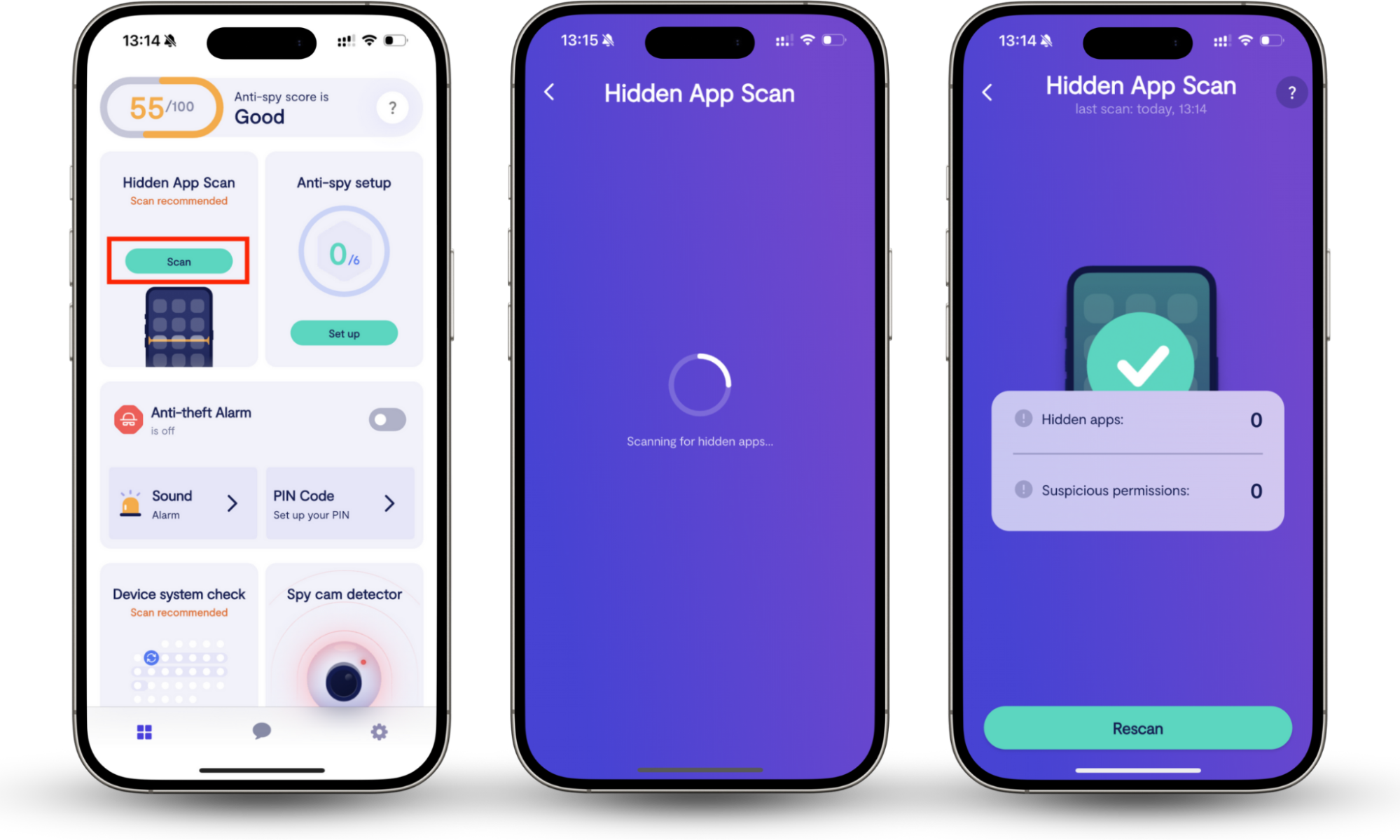
Here's how to use Clario Anti Spy's Hidden app scan:
- Open Clario Anti Spy and select Scan under the Hidden app scan feature.
- Clario will run a full scan of your mobile device. This looks for signs of spying apps, like spyware and parental control apps that someone may have secretly installed.
- Review the results. Look for unfamiliar apps or tools with excessive permissions (like access to messages, location, or camera). Just as you verify suspicious information online, checking app activity helps you spot hidden privacy risks early.
If you want to strengthen your resistance to misinformation long-term, books can help because they train attention, deepen context, and reduce reliance on fast, emotional headlines. The titles below focus on digital habits, online reputation, and stress resilience, all of which affect how easily misinformation spreads through social sharing.
Before choosing a book, here’s a quick guide to what each one helps you improve in the context of fake news and digital overload:
| Book | Best for | How it helps against fake news |
| AI Snake Oil – Arvind Narayanan & Sayash Kapoor (2024) | Understanding what AI can realistically do | Helps identify exaggerated or misleading claims about artificial intelligence, detect AI-generated content risks, and evaluate algorithm-driven narratives more critically |
| This Is for Everyone – Tim Berners-Lee (2025) | Understanding how the web shapes information flow | Explains how internet architecture and platform design influence visibility, credibility, and the spread of misinformation |
| Digital Minimalism – Cal Newport | Rebuilding attention and reducing compulsive scrolling | Helps limit impulsive sharing and lowers exposure to outrage-driven or algorithmically amplified content |
| Socialnomics – Erik Qualman | Understanding how online behavior affects reputation and privacy | Explains how misinformation spreads through “social proof” and how careless sharing can damage credibility |
| Burnout – Emily & Amelia Nagoski | Managing stress and emotional overload | Reduces the emotional triggers that make sensational or manipulative claims feel urgent and convincing. |
A list of books worth reading below may also help you better understand why you need to keep your digital space clean and tidy.
- AI Snake Oil: What Artificial Intelligence Can Do, What It Can't, and How to Tell the Difference | Arvind Narayanan & Sayash Kapoor
Explains how modern AI systems work and how to separate real capabilities from hype, giving readers tools to critically assess algorithm-driven content, especially useful for understanding misinformation and AI-generated fake media.
- This Is for Everyone: The Unfinished Story of the World Wide Web | Tim Berners-Lee with Stephen Witt
By the inventor of the web, this memoir traces the evolution of the internet and offers insight into how people can reclaim control over their digital lives, including how systems shape what we see and believe online.
- Digital Minimalism | Cal Newport
A book that would have been useful to us ten years ago. Back then, we could not correct mistakes in our online behavior, but we wouldn’t allow them in the first place. The book helps us to understand the importance of online communication and enables our minds to return to a time when smartphones did not play a significant part of our life.
- Socialnomics | Erik Qualman
This book covers the best ways to protect your personal data, what you should and shouldn't publish, and how to maintain your online reputation. The author gives examples of real mistakes made by celebrities and companies in social networks and advice on how to avoid them.
- Burnout | Emily and Amelia Nagoski
This is a research-based book on how to deal with emotions, how to defend your position and how to get rid of accumulated stress.
Practical takeaway
You cannot fully eliminate exposure to misinformation, but you can reduce risk by slowing down before sharing, checking original sources, and limiting high-arousal content that encourages impulsive reactions. Consistent verification habits matter more than any single tool or platform policy.
Conclusion
When it comes to the problem of fake news and conspiracy theories, you cannot give yourself complete protection. Your ability to resist these tendencies boils down to your own tech literacy and awareness of any online threats.
Staying informed is essential, but protecting your device is just as important. Clario Anti Spy helps you check your phone for hidden spying apps, suspicious permissions, and potential data leaks. With features like Hidden App Scan, it adds an extra layer of privacy protection to your digital life on iOS and Android.
To become more educated and aware, check out Clario’s blog. And if you’d like to discover more about how living in the digital realms can exploit you and your data, we have some excellent selections of podcasts and movies for you to get into.
Read more: