Table of contents
- VPN vs. Proxy: how do they work?
- Differences between proxy and VPN
- Do VPNs or proxies provide faster speeds?
- Unlike proxy servers, VPNs actually encrypt your data
- A VPN’s operations are not limited to the application level
- What should I use, a proxy server or a VPN?
- Proxy vs. VPN: differences and recommendations
Contrary to popular belief, a proxy server and a VPN aren’t the same. While both can hide your location, one is better for simple geo-spoofing, while the other offers military-grade encryption to anonymize your network traffic completely.
This article will help you decide which tool fits your online privacy needs in 2025. After reading it, you’ll be able to answer the following questions.
Let’s start with the basics.
VPN vs. Proxy: how do they work?
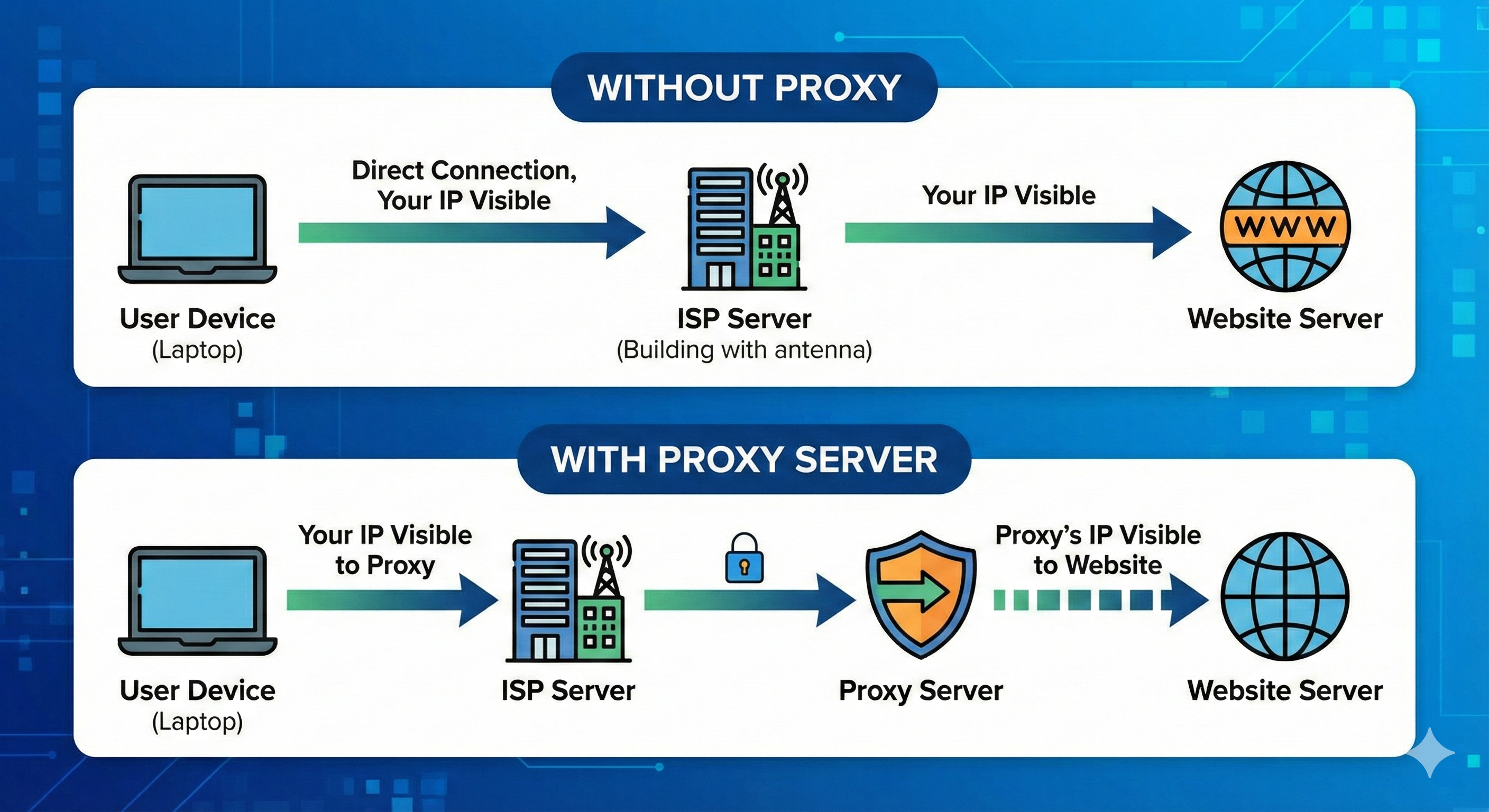
When you try to open a web page, your device sends a request through your Internet Service Provider (ISP). The ISP sees the request and shares your IP address with the website you are trying to access. The website then receives your IP and grants you access.
Boom, you’re in.
Your IP address is associated with who you are, where you live, and what you do online. A proxy will mask this information from other parties online.
A proxy server acts as a middleman between you and the internet. When using a proxy, the exchange between your ISP and the website you are trying to access is remodeled. Your ISP sends the IP of your proxy server to the website instead of your device’s IP. Hence, it looks like your proxy, not you, has visited the website.
Similarly to a proxy server, a VPN (Virtual Private Network) hides your IP address. But alongside this, a VPN encrypts all the data flowing between you and the web.
This is the main difference between a proxy server and a VPN. But there is more to help you differentiate a proxy from a VPN. Let’s look at the key factors.
Speaking of key factors, browser safety is essential in protecting your privacy. Without using specialized tools to address online safety, your data could be vulnerable to attackers, advertisers, and other third parties.
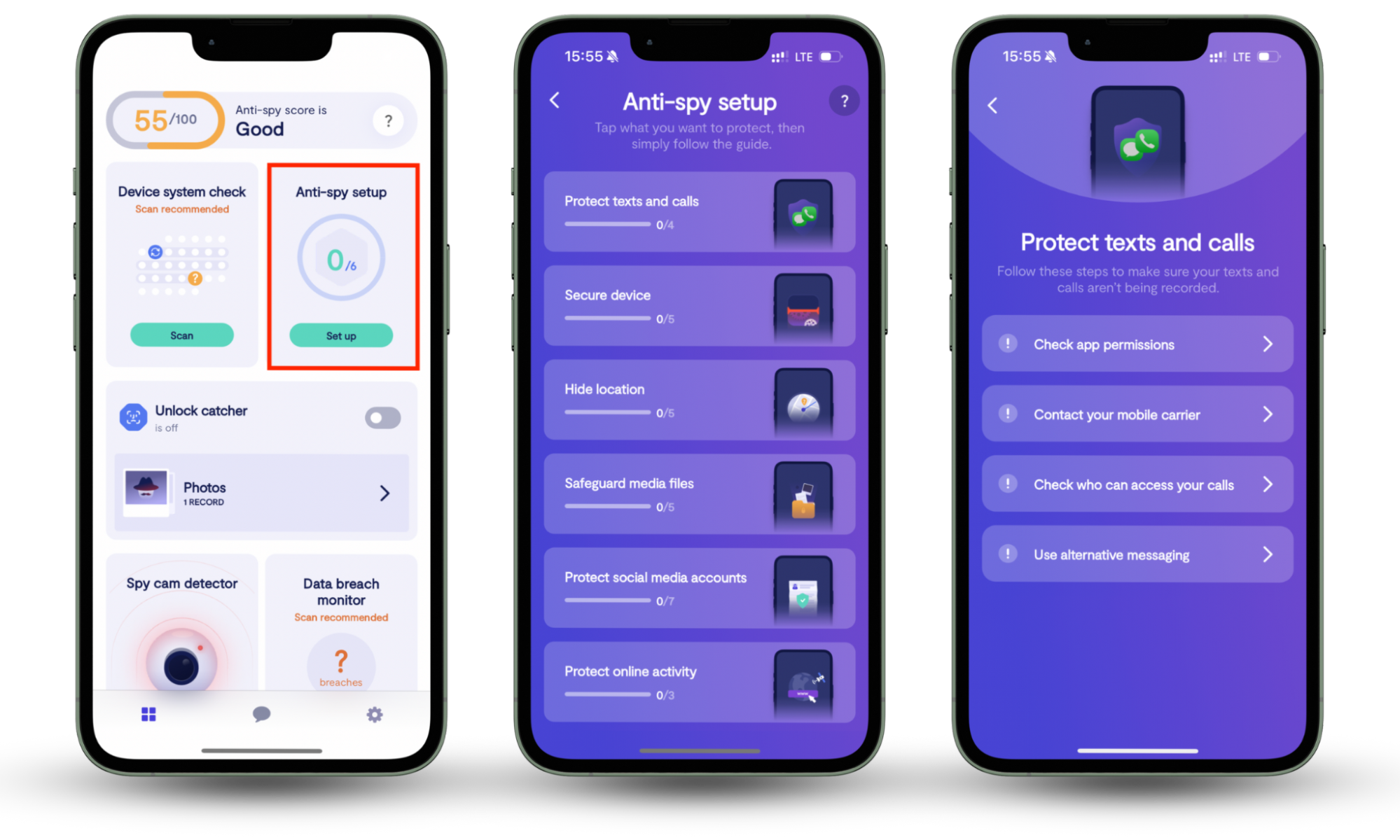
Clario Anti Spy’s Anti-spy setup tool is the perfect solution for privacy-minded individuals who don’t compromise when it comes to their data. By meticulously guiding you through multiple sets of checklists, including those related to your online activity, it empowers you to browse the web securely. There’s so much more to explore in Clario’s Anti-setup tool, such as guides to protect your social media accounts and media files, hide your location, and secure your phone.
Here's how to secure your device with Clario Anti Spy:
- Download Clario Anti Spy and set up your account.
- Tap Anti-spy setup on the dashboard.
- Follow the on-screen checklist to restrict app permissions and secure your OS.
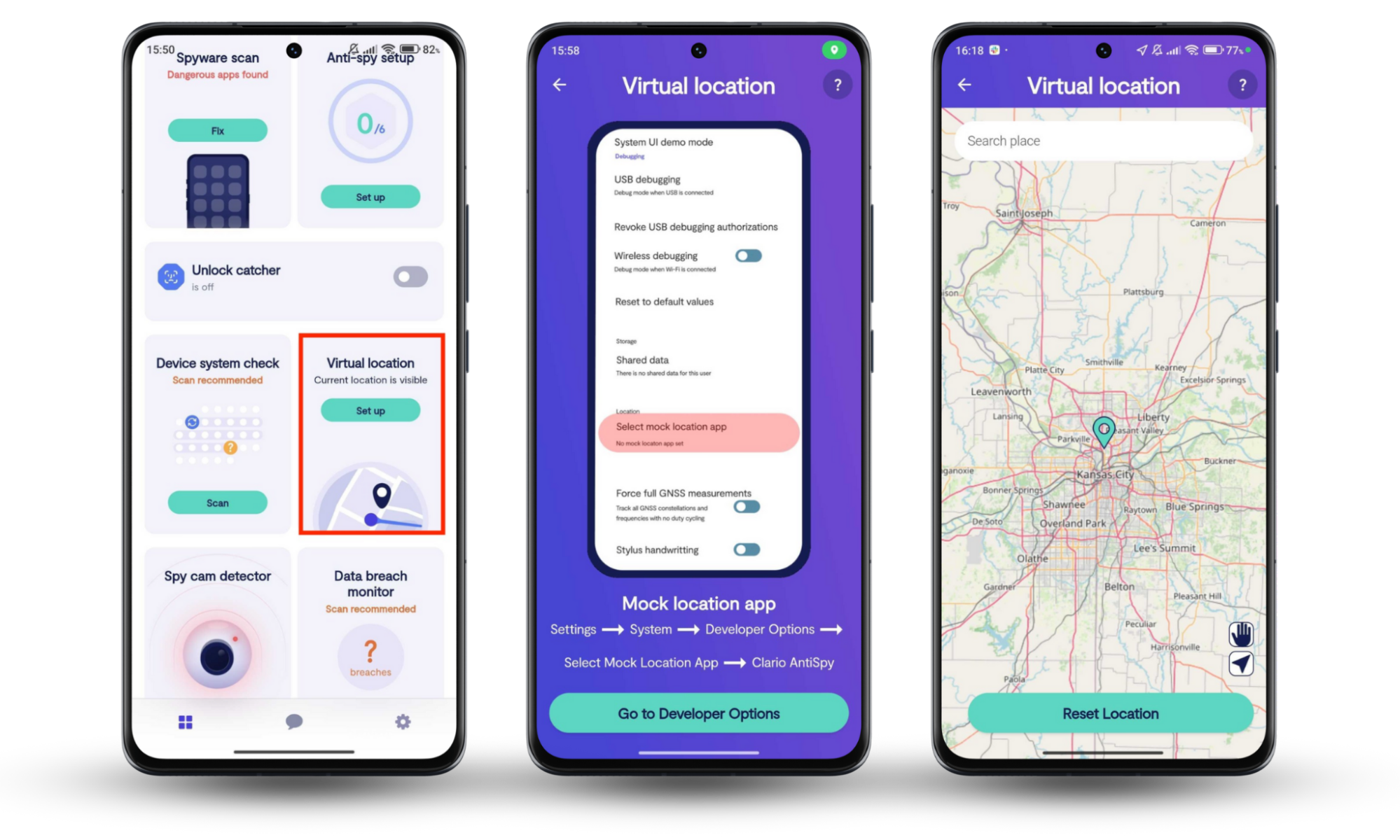
Another useful Clario Anti Spy's feature is the Virtual location feature on Android, which provides you with an extra layer of privacy. By masking your actual location, this feature ensures that third parties cannot track your physical whereabouts, which is especially helpful in situations where you need to keep your location private. It works in the background while you browse the internet or use apps, offering seamless protection for your privacy.
Recently, one customer shared her story after using Clario’s Virtual Location. They were able to securely access geo-blocked content and keep their whereabouts hidden while traveling abroad. The customer mentioned, “I had trouble accessing my favorite services from home while traveling. After setting up Clario’s Virtual Location, everything worked smoothly, and I could access all my content without worrying about being tracked."
Here is how you can set up Clario Anti Spy's Virtual location:
- Download Clario Anti Spy on your Android device.
- Once you’re inside the app, tap Set up under Virtual location.
- Now follow the on-screen prompts to reset your location, choosing your preferred one on the map.
Differences between proxy and VPN
Let’s see how proxies and VPNs differ in terms of speed, data encryption, and operation level.
Do VPNs or proxies provide faster speeds?
There is a common misconception that proxies are faster because they don't encrypt data. While technically true for private proxies, public/free proxies are often incredibly slow due to overcrowding. You might have difficulties watching video streams, downloading files, or accessing certain websites.
A premium VPN might slightly reduce speed due to encryption, but it is generally faster and more stable than a free proxy server.
Paid proxy servers are somewhat faster for a couple of reasons:
- First, since they’re not free, fewer people use them. This means the loading speed is better as there is less strain on the provider’s resources.
- Secondly, private proxies often cache data. This means your proxy saves copies of visited sites.
- When you access them for a second time, you don’t visit them directly - your proxy shows you the saved versions. Thus, everything appears straight away.
A VPN can also slow down the connection speed if its servers are too far away from your location. But you will hardly notice a delay with the top VPN providers as they invest heavily in technology and maintenance.
So, go for a VPN if you need to watch streamed content without a glitch.
Unlike proxy servers, VPNs actually encrypt your data
Though both a proxy and VPN hide your IP address, they handle your data differently. A proxy server is just a ‘man-in-the-middle’ between you and the web. It doesn’t secure any data you send and receive when using the internet. Its sole purpose is to manipulate and mask your device’s IP address from the sites you visit.
For example, if you decide to check your credit card balance using public Wi-Fi, a skilled hacker could intercept your credit card details. How do you prevent this? First, of course, avoid doing anything with sensitive data via public Wi-Fi. And if you have to, opt-in for a VPN service.
VPNs go beyond just hiding your IP. They encrypt all the data you send and receive, creating a secure encrypted tunnel using protocols like WireGuard or IKEv2. This means neither the websites you visit nor hackers looking to steal your sensitive details can seize your data. Even your ISP will never know what you’re doing while you’re securely browsing online.
However, remember to avoid free VPN and web proxy providers. More often than not, they collect and sell your data, making all their privacy and security services just part of their marketing campaigns.
A VPN is your best bet if you want your data to be secured and surf the net, knowing you are protected.
A VPN’s operations are not limited to the application level
The fundamental difference between a VPN and a proxy server is how they operate differently. While a proxy server works on the app level, a VPN covers the entirety of your operating system. Confusing? Let us explain.
A proxy works on the application level. You can set up one proxy for Google Chrome and another for Telegram. However, a proxy will only mask the real IP of your browser; it doesn’t stop other background applications from broadcasting your data.
Meanwhile, a VPN protects the system level. It encrypts every interaction your device has with the internet, regardless of which app you are using. You can either install a VPN directly on your computer or on your router and enjoy encrypted browsing on all devices connected to the network. For instance, using a VPN is the only way to encrypt the data that comes from your smart TV.
That’s why, if you’re serious about protecting your entire system, opt for a VPN.
What should I use, a proxy server or a VPN?
While an average proxy is cheaper than an average VPN, it’s critical to know if paying more is worth it. So, if the only thing you want is to hide your ID from onlookers, a basic proxy server will do. Besides, a proxy will grant you access to a website unavailable in your location.
But if you need to do more than just bypass a region lock, a proxy is risky in 2025. Without encryption, your ISP, government, or hackers on the same Wi-Fi network can still analyze your traffic patterns, and here’s why you need a VPN. While hiding your IP address, a VPN prevents anyone from seeing, selling, or even stealing your data, be it your ISP, a malicious proxy server owner, the government, or a hacker lurking on the same network.
Proxy vs. VPN: differences and recommendations
We hope our guide helped you understand why you need a VPN to browse the web safely. While both a proxy and VPN can offer some value, a dedicated online privacy tool for your mobile phone can offer much value.
Clario Anti Spy offers a practical Anti-spy setup solution that helps you browse securely while protecting you from real-world threats like spy cams and unauthorized device access. Try it today to protect your privacy both online and offline.